
Air to Water vs Air to Air Heat Pump: What's the Difference and Which Should You Choose?
Air to water or air to air heat pump? We break down costs, grants, and heating performance so you can pick the right system for your UK home in 2026.

Written by Heat Pump Buddy
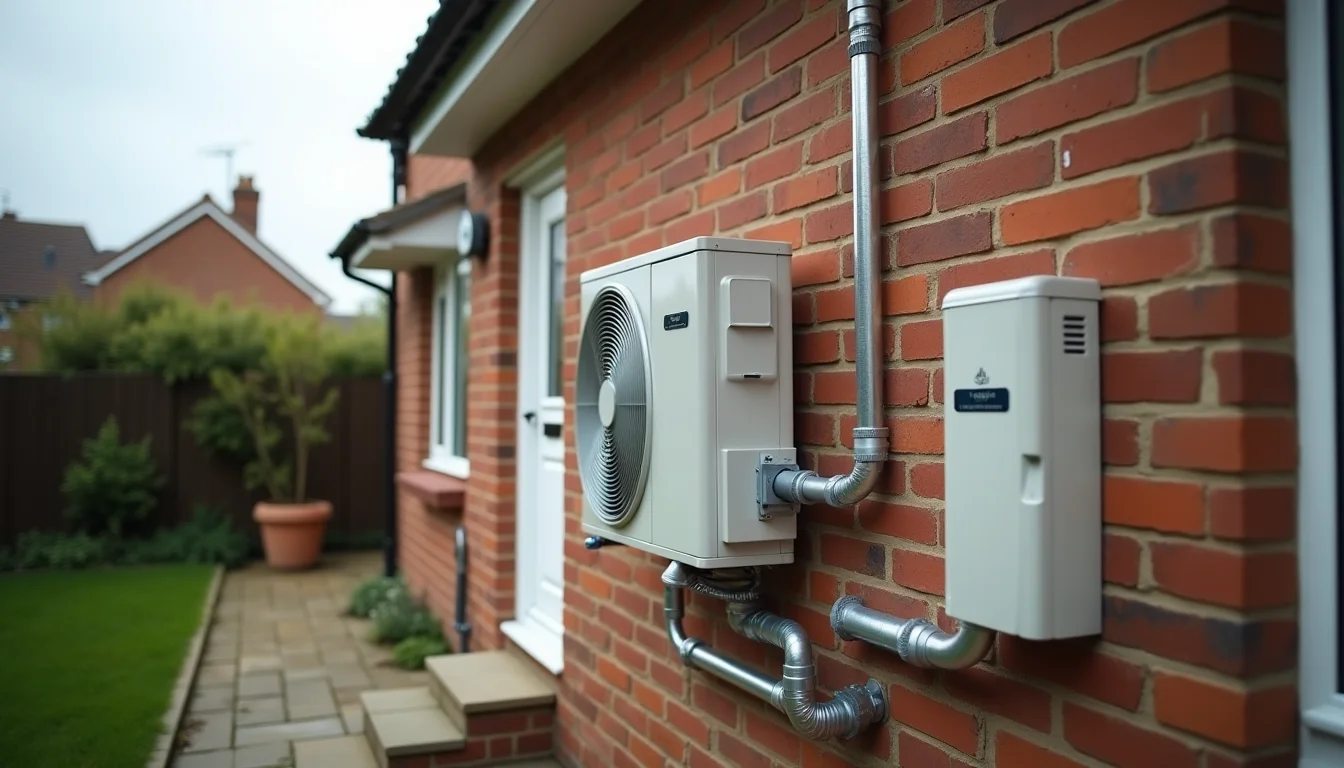
An air to water heat pump heats water that flows through your radiators and taps, replacing your gas boiler. An air to air heat pump blows warm air directly into your rooms, much like a reverse air conditioning unit, and can't produce hot water. If you want a straight boiler replacement that also qualifies for the £7,500 Boiler Upgrade Scheme grant, air to water is almost certainly the one you want.
How Do Air to Water and Air to Air Heat Pumps Actually Work?
Both types pull heat from the outside air using a refrigerant cycle. The difference is what happens once that heat has been captured.
An air to water system transfers the heat into a water circuit. That hot water then feeds your radiators, underfloor heating, and your hot water cylinder, exactly the way a boiler does. Your existing central heating pipework can often stay in place, though you may need to swap a few radiators for larger ones to work well at the lower flow temperatures a heat pump delivers.
An air to air system pushes heated air directly into your rooms through wall-mounted units, the same kind you see in hotels or offices. There's no water circuit involved. That means no radiators, no underfloor heating, and no hot water from the system. You'd still need a separate immersion heater or dedicated hot water cylinder.
Frankly, this is the single biggest distinction most homeowners need to understand before going any further.
Which Type Fits a Typical UK Home?
Most UK homes already have a wet central heating system with radiators, a hot water cylinder (or a combi boiler), and pipework running through the walls and floors. An air to water heat pump slots into that existing setup. Your plumber disconnects the boiler, connects the heat pump to the same pipework, and the house carries on working in roughly the same way it always did.
Air to air is a different proposition. You'd need indoor fan units mounted on walls in each room you want to heat, along with refrigerant lines running back to the outdoor unit. If you've got a three-bed semi, that could mean four or five indoor units. It works, but it's a fundamentally different approach to heating your home.
For a new-build with no existing heating system, or a commercial property, air to air can make sense. For most existing UK houses, air to water is the practical choice.
Air to Water vs Air to Air Heat Pump: Costs Compared
Here's a rough breakdown of what you'd expect to pay in 2026 before any grants:
- Air to water heat pump (fully installed): £10,000 to £18,000 depending on the size of your home, the brand, and whether you need a new hot water cylinder or upgraded radiators.
- Air to air heat pump (multi-split system for a whole house): £5,000 to £12,000 depending on how many rooms you're heating.
Air to air looks cheaper on paper. But remember, it won't heat your water. Add in an unvented hot water cylinder with an immersion heater (around £1,500 to £2,500 installed), and the gap narrows.
Running costs depend heavily on your home's insulation, the size of the system, and your electricity tariff. A well-installed air to water heat pump in a reasonably insulated home should achieve a Coefficient of Performance (COP) of around 3.0 to 3.5. That means for every 1 kWh of electricity it uses, it produces 3 to 3.5 kWh of heat. Air to air systems can hit similar or slightly higher COPs, but they don't cover your hot water demand, so total electricity use may end up comparable once you account for the immersion heater.
Does the £7,500 Boiler Upgrade Scheme Grant Cover Both Types?
This is where it gets decisive. The Boiler Upgrade Scheme (BUS) grant of £7,500, available in England and Wales through 2028, only applies to air to water and ground source heat pumps. Air to air heat pumps are not eligible.
That £7,500 comes straight off your installation cost. So a £14,000 air to water installation could drop to £6,500 out of pocket. You won't get a penny of BUS funding towards an air to air system.
To qualify, the installation must be carried out by an MCS certified installer, and your property needs a valid EPC (Energy Performance Certificate). The grant is applied for by your installer, not by you directly, so choosing an MCS certified company is non-negotiable.
In Scotland, the Home Energy Scotland grant and loan scheme offers similar support for air to water heat pumps, again excluding air to air.
Honestly, for most homeowners weighing up these two options, the grant alone tips the scales heavily towards air to water.
"Will a Heat Pump Actually Keep My House Warm Enough?"
This is the number one concern we hear. And it's a fair question.
Air to water heat pumps work differently from boilers. A gas boiler fires up, blasts out water at 60 to 70°C, and heats the house quickly. A heat pump typically runs at lower flow temperatures, around 35 to 45°C, and heats the house more gradually. It tends to run for longer periods rather than short bursts.
This doesn't mean your house will be cold. It means the system needs to be properly sized and well designed. If your installer does a proper heat loss calculation (and any decent MCS installer will), your home should reach and hold a comfortable temperature throughout the winter.
Larger radiators or underfloor heating help because they can emit the same amount of heat at lower water temperatures. If your home is poorly insulated, with single glazing and uninsulated walls, a heat pump will struggle. But then, so will a boiler. Insulation improvements should come first in that scenario.
Air to air systems respond faster because they blow warm air directly. But the heat can feel less even, and rooms can cool down quickly once the unit stops. There's also the noise from indoor fan units to consider, something that bothers some people more than others.
Let's take a real example. A 1960s three-bedroom semi in Leeds with cavity wall insulation, double glazing, and 200mm of loft insulation would have a heat loss of roughly 6 to 8 kW. A 7 kW or 8 kW air to water heat pump, properly installed, would heat that home comfortably and provide all its hot water. After the BUS grant, the homeowner might pay around £6,000 to £8,000 and see annual heating bills of roughly £900 to £1,100 at current electricity rates of about 24p per kWh.
Air to Water vs Air to Air: Quick Comparison
| Feature | Air to Water | Air to Air |
|---|---|---|
| Heats radiators/underfloor | Yes | No |
| Provides hot water | Yes | No |
| BUS grant eligible | Yes (£7,500) | No |
| Replaces gas boiler | Yes | No |
| Typical installed cost | £10,000 to £18,000 | £5,000 to £12,000 |
| MCS certification required for grant | Yes | N/A |
| Cooling in summer | Some models, limited | Yes, most models |
| Indoor units needed | No (uses existing radiators) | Yes (wall-mounted in each room) |
One advantage air to air does have is cooling. Most air to air units can reverse to provide air conditioning in summer. Some air to water systems offer cooling too, but it's limited and less effective. If summer cooling matters to you, that's worth factoring in.
Frequently Asked Questions
Can an air to air heat pump replace a gas boiler?
Not really. An air to air heat pump can heat your rooms but it can't produce hot water or connect to your existing radiators. You'd still need a separate system for hot water, so it's not a like-for-like boiler replacement.
Do you get the £7,500 grant for an air to air heat pump?
No. The Boiler Upgrade Scheme grant in 2026 only covers air to water and ground source heat pumps. Air to air heat pumps are excluded from BUS funding entirely.
Is air to water or air to air cheaper to run?
They have similar efficiency ratings, but air to water covers both heating and hot water from one system. Air to air needs a separate hot water source, typically an electric immersion, which can push overall electricity costs up to a similar level or higher.
Can you have air to air and air to water heat pumps in the same house?
You can, though it's unusual. Some homeowners install an air to water system for heating and hot water, then add a single air to air unit in a room that's hard to heat or where they want summer cooling. It's a niche setup and adds cost.
How noisy is an air to water heat pump compared to air to air?
Outdoor units for both types produce similar noise levels, typically 40 to 50 dB at one metre. The key difference is indoors: air to air has fan units in your rooms that make a low hum when running. Air to water has no indoor noise beyond the sound of water moving through pipes, which is barely noticeable.
If you're leaning towards an air to water heat pump and want to make the most of the £7,500 BUS grant, the next step is finding a qualified installer near you. Use our directory at heatpumpinstallerdirectory.co.uk to get quotes from MCS certified heat pump installers in your area. Every installer listed is MCS registered, so you know they can handle the grant application on your behalf.