
Are Heat Pumps Noisy? How to Reduce Heat Pump Noise for UK Homeowners
Worried about heat pump noise? Real decibel comparisons, UK planning limits, and proven ways to keep your installation quiet and neighbour-friendly.

Written by Heat Pump Buddy
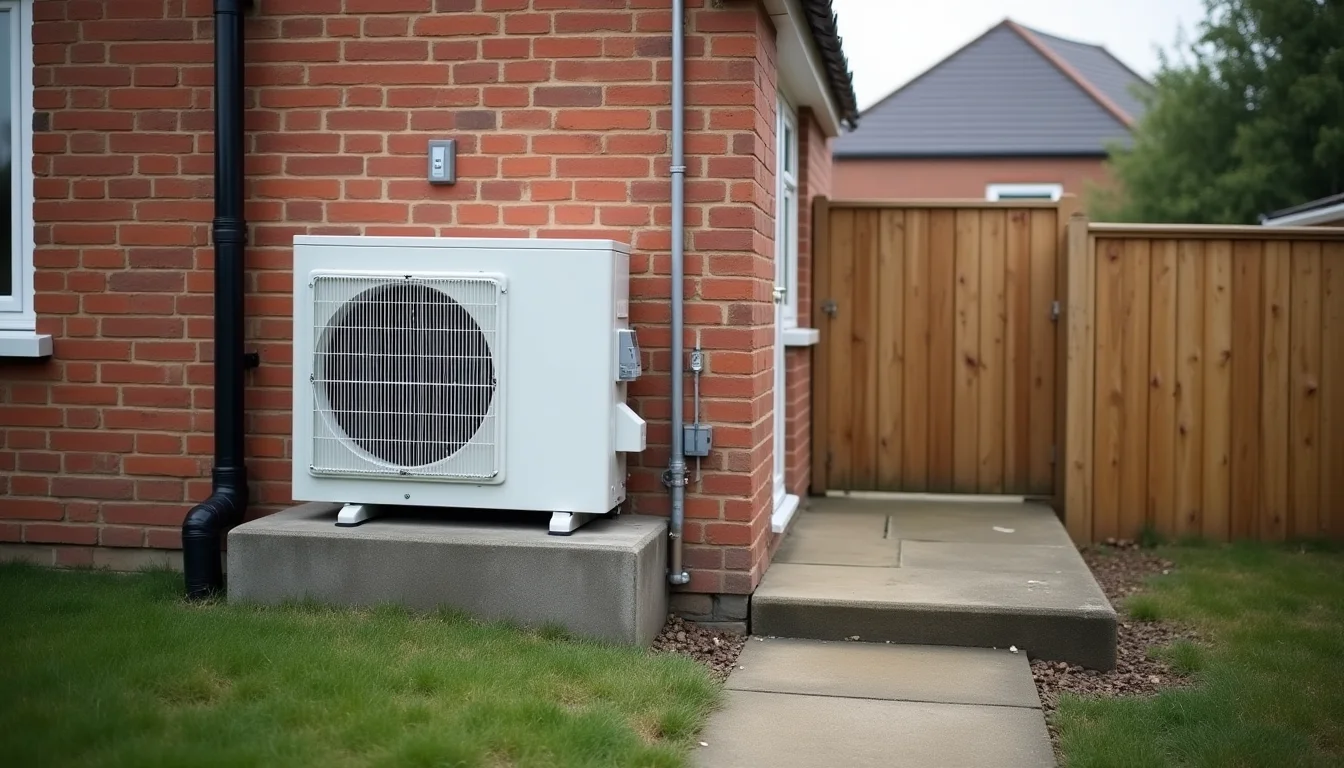
Modern heat pumps are not noisy. A typical air source heat pump produces around 40 to 55 decibels at one metre, which is roughly the same volume as a fridge or a quiet conversation. With proper placement and the right model, most homeowners forget the unit is even running.
How Loud Is a Heat Pump in Real Terms?
Numbers on a spec sheet don't mean much until you compare them to sounds you actually know. A normal conversation sits at about 60 dB. A washing machine on spin cycle hits around 70 to 75 dB. Most modern air source heat pumps operate between 40 and 55 dB at one metre from the unit.
By the time you're three metres away, that figure drops noticeably because sound decreases by roughly 6 dB every time you double the distance from the source. So a unit rated at 50 dB at one metre will be closer to 38 dB at four metres. That's quieter than a library.
Honestly, the old reputation for noise came from earlier models that were louder and less refined. The units available in 2026 are a different story altogether.
What Are the UK Planning Rules on Heat Pump Noise?
Under permitted development rights, you can install an air source heat pump without a full planning application as long as certain conditions are met. One of the key rules is that the unit must not exceed 42 dB(A) at the nearest neighbouring property's boundary.
That 42 dB limit is measured using MCS 020, the planning standard that MCS certified installers must follow. This standard accounts for background noise levels and includes a tonal penalty if the unit produces a noticeable hum or whine. Your installer should carry out a sound assessment as part of the design process.
If the installation can't meet that 42 dB threshold at the boundary, you'll need to apply for full planning permission. But with the right model choice and positioning, this is rarely an issue on most UK properties.
How to Reduce Heat Pump Noise: Practical Steps That Work
There are several things you can do, and your installer should be advising on all of them before fitting begins.
Choose a quieter model from the start. Some heat pumps are simply quieter than others. Units from manufacturers like Vaillant, Grant, and Samsung offer models rated below 45 dB at one metre. Ask your installer to show you the sound data for any unit they're quoting. A couple of decibels might not sound like much on paper, but because the decibel scale is logarithmic, a 3 dB reduction actually halves the perceived sound energy.
Get the placement right. Don't mount the heat pump directly below a bedroom window. Don't tuck it into a corner between two walls where sound can bounce and amplify. And don't position it facing directly at a neighbour's patio. A good installer will think about all of this during the site survey.
Use anti-vibration mounts. These rubber or spring-loaded feet sit between the unit and whatever surface it's placed on. They stop vibrations from transferring into walls or concrete pads, which can create a low-frequency hum indoors.
Consider an acoustic enclosure or barrier. Purpose-built acoustic enclosures can reduce noise by 5 to 10 dB. Even a well-placed solid fence or wall between the unit and a neighbour's boundary can make a noticeable difference. Just make sure you don't restrict airflow around the heat pump, as that will hurt performance.
Keep up with maintenance. A dirty fan, loose panel, or blocked filter can make any unit louder over time. Annual servicing by a qualified engineer keeps noise levels where they should be.
A Real Example: Semi-Detached Home in Leeds
Take a typical 1930s semi-detached in a Leeds suburb. The homeowner had a Vaillant Arotherm plus 7kW unit installed in early 2026. The unit is rated at 46 dB(A) at one metre.
The installer positioned it on the side return, about 3.5 metres from the neighbour's boundary fence. With anti-vibration feet on a concrete plinth and a 1.8 metre timber fence between the unit and the boundary, the measured noise at the fence line came in at 37 dB(A). That's well within the 42 dB permitted development limit.
The homeowner's neighbour said they couldn't hear it from inside their house at all. From their garden, they described it as "quieter than the birds."
Can You Get the £7,500 BUS Grant if Your Heat Pump Is Too Loud?
The Boiler Upgrade Scheme (BUS) grant of £7,500 is still available in 2026 for homeowners in England and Wales replacing a fossil fuel heating system with a heat pump. The grant is applied for by your MCS certified installer, and it comes off your installation cost directly.
Here's where noise matters: to qualify for the BUS grant, your installation must be carried out by an MCS certified installer following MCS standards. That includes MCS 020, the noise assessment. If your installer doesn't do this properly and the installation breaches permitted development noise limits, you could face enforcement action from your local council regardless of whether the grant was paid.
So the grant and noise compliance go hand in hand. A properly certified installer will get this right as a matter of course. If someone is quoting you for a heat pump and doesn't mention a noise assessment, that's a red flag.
"My Neighbours Will Complain" — Addressing the Biggest Worry
This is the concern that holds more people back than almost anything else. And it's completely understandable, especially if you share a boundary wall or live on a tight terrace.
But here's the reality. A heat pump running at 40 dB at the boundary is quieter than most air conditioning units, garden water features, and certainly quieter than a petrol lawnmower. Your neighbours are far more likely to notice the unit visually than they are to hear it.
If you're genuinely worried, talk to your neighbours before the install. Show them the noise data. Explain where it's going and why. Most people are curious rather than hostile. And if you've got an MCS certified installer who has done the sound assessment properly, you've got the numbers to back it up.
In the rare cases where noise does become an issue after installation, there are always options. Acoustic barriers, repositioning, or even switching to a quieter operating mode during night hours can all help. Most modern heat pumps have a "quiet mode" or "night mode" that reduces fan speed and drops noise output by 3 to 8 dB.
Frequently Asked Questions
How many decibels is a heat pump?
Most air source heat pumps produce between 40 and 55 dB(A) measured at one metre from the outdoor unit. At three to four metres, that drops to around 35 to 45 dB(A), which is similar to a quiet office or library. The exact figure depends on the model, capacity, and operating load.
Can you hear a heat pump from inside your house?
In most properly installed systems, you won't hear the outdoor unit from inside the house. Indoor components like the cylinder may produce a very faint hum, but it's typically no louder than a boiler. Anti-vibration mounts and correct pipework insulation help prevent any noise transfer through walls.
What is the legal noise limit for heat pumps in the UK?
Under permitted development rules, an air source heat pump must not exceed 42 dB(A) at the nearest neighbour's property boundary. This is assessed using the MCS 020 planning standard, which your MCS certified installer must follow. If this limit can't be met, you'll need to apply for full planning permission.
Do heat pumps get louder in winter?
Heat pumps can be slightly louder in cold weather because the compressor works harder and the defrost cycle kicks in periodically. The increase is usually only 2 to 5 dB and most people don't notice it. Choosing an inverter-driven model helps because these ramp up gradually rather than switching on at full blast.
What is the quietest heat pump you can buy in the UK?
Several models on the market in 2026 are rated below 45 dB(A) at one metre, including options from Vaillant, Grant, Daikin, and Samsung. Some smaller capacity units come in as low as 38 dB(A). Your installer can recommend the quietest option that still meets your home's heating demand.
If you're ready to get accurate noise data and a proper quote for your property, find a local MCS certified heat pump installer on heatpumpinstallerdirectory.co.uk. Every installer listed is qualified to carry out the noise assessment, handle your £7,500 BUS grant application, and make sure your installation is fully compliant from day one.
Ready to talk to an installer?
Compare the listed firms, then check current MCS status, service coverage and any grant registration directly. Contact routes are shown when a firm has published one.
Related guides
- How Does a Heat Pump Work in Winter? A Practical Guide
Step-by-step explanation of how heat pumps extract warmth in freezing UK winters, including defrost cycles, backup heating, and tips to keep efficiency high.
- Do Heat Pumps Work With Existing Radiators?
Can you keep your existing radiators with a heat pump? Learn which radiators work, which need upgrading, and how flow temperature affects your heating system.
- Do Heat Pumps Work in Cold Weather in the UK?
Worried your heat pump won't cope with a UK winter? Here's how modern systems perform at sub-zero temperatures, plus practical tips to keep efficiency high.