
Can I Get a Heat Pump in a Terraced House? A Step-by-Step Guide
Worried a heat pump won't work in your terraced house? This step-by-step guide covers space, planning rules, grants and real solutions for 2026.

Written by Heat Pump Buddy
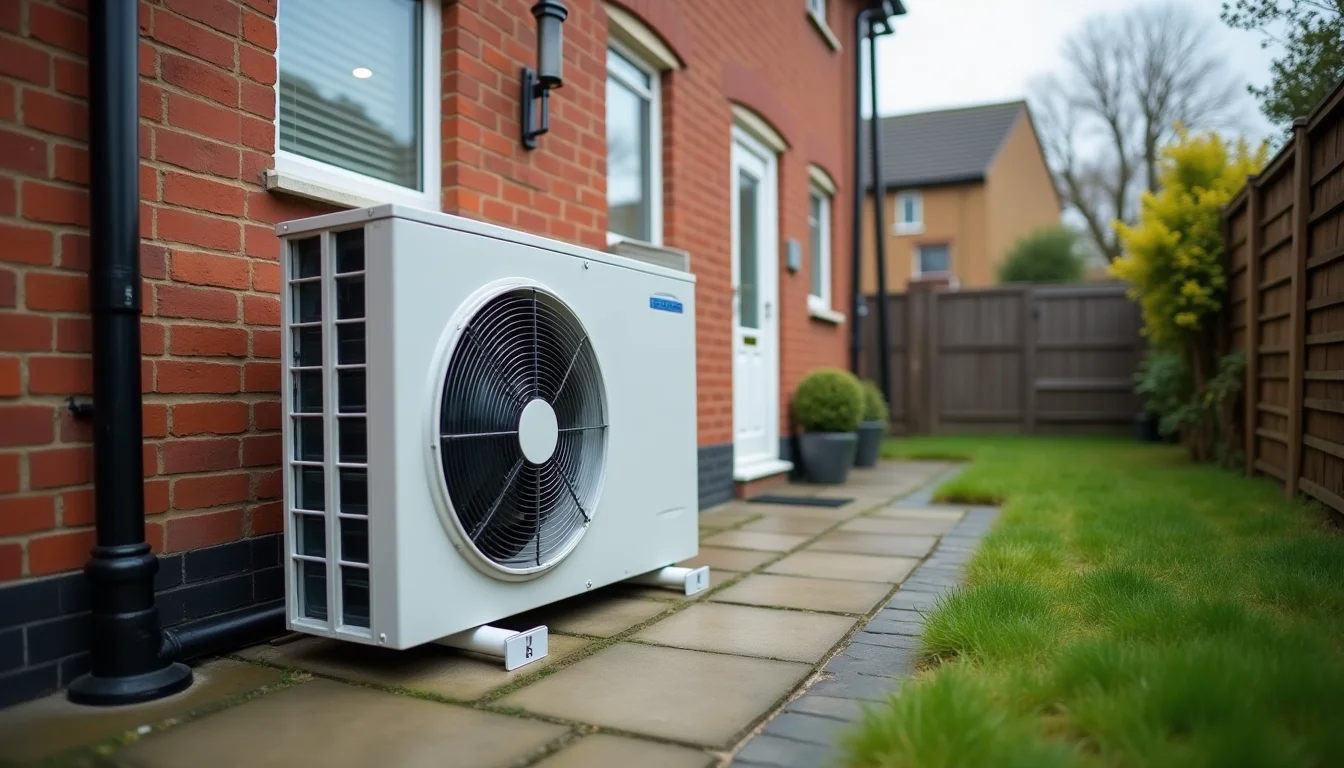
Yes, you absolutely can get a heat pump in a terraced house. Thousands of UK terraced homeowners have already done it, and the technology fits these properties better than most people assume. The key is choosing the right type of system, placing the outdoor unit sensibly, and working with an MCS certified installer who knows what they're doing.
Why Do People Think Terraced Houses Can't Have Heat Pumps?
This is one of the most persistent myths in the heat pump world, and it comes down to three worries: not enough outdoor space, noise bothering neighbours, and planning permission headaches. All three are genuine concerns. But none of them are dealbreakers.
The outdoor unit for an air source heat pump is roughly the size of a large suitcase standing on its end. You don't need a massive garden. A small yard, side return, or even a front wall position can work perfectly well.
Noise is the worry that keeps coming up in online forums. Modern air source heat pumps from manufacturers like Vaillant, Daikin, and Samsung run at around 40-50 dB at one metre. That's quieter than a typical fridge-freezer measured from the same distance. Permitted development rules require the unit to be at least one metre from any property boundary, and many compact models sit comfortably within that limit even in tight terraced layouts.
Step 1: Check Whether Your Terraced House Is Suitable
Before you start getting quotes, there are a few things worth checking yourself.
First, look at your outdoor space. You need enough room for the unit itself (typically 800mm wide by 600mm deep) plus clearance around it for airflow. A paved back yard, a side passage, or a front garden all count. If you've got a small courtyard of at least 1.5m by 1.5m, you're almost certainly fine.
Second, think about your home's insulation. Heat pumps work best in well-insulated homes, and terraced houses actually have a natural advantage here. Mid-terrace properties share two walls with neighbours, which means less heat loss than a detached or semi-detached home. Your heating demand is already lower, which makes the heat pump's job easier.
Third, check your existing radiators. If your home still has the original small rads from the 1970s, you'll likely need to upsize some of them. Your installer will calculate the exact heat output needed room by room.
Step 2: Choose the Right Type of Heat Pump for a Terraced House
For most terraced houses, an air source heat pump (ASHP) is the obvious choice. It's the most practical, the least disruptive to install, and it qualifies for the full £7,500 Boiler Upgrade Scheme grant.
Ground source heat pumps (GSHPs) are possible but trickier. You need either a borehole (which requires access for a drilling rig) or horizontal ground loops (which need a garden of roughly 100-200 sqm depending on the system). Most terraced homes don't have that kind of space.
There is a third option gaining traction in 2026: shared ground loop arrays. Several terraced streets across the UK have installed communal ground loops, where a single borehole network serves multiple properties. Stoke-on-Trent, for example, saw a scheme in a row of Victorian terraces where a shared ground source system was installed under the street itself. This approach brings down costs per household and works brilliantly for terraced rows, but it does require coordination between neighbours and local planning.
For most individual homeowners reading this, though, an air source heat pump is going to be the answer.
Step 3: Planning Permission and Party Walls in Terraced Houses
Here's where terraced homes do have some specific rules to follow.
Under permitted development rights in England, you can install an air source heat pump without full planning permission as long as the unit meets certain conditions. It must comply with MCS Noise Assessment standards, be at least one metre from the property boundary, and not be installed on a wall or roof facing a highway in a conservation area. The unit also can't exceed one cubic metre in external dimensions, which covers almost every domestic model on the market.
If your terraced house is in a conservation area or is a listed building, you will need planning permission. Don't let that put you off. Councils are approving more heat pump applications every year, and a good installer will help you with the paperwork.
What about the Party Wall Act? If the heat pump is being mounted on or very close to a shared wall, you may need to serve a party wall notice on your neighbour. In practice, most installations position the unit on the ground in a yard or garden, which avoids this entirely. But if wall mounting is the only option, speak to your installer and potentially a party wall surveyor before committing.
One tip: talk to your neighbours early. Not because you legally have to in every case, but because it's the decent thing to do and it avoids disputes later.
Step 4: How to Overcome Limited Outdoor Space
This is the bit that catches people out, so let's be specific.
If your back yard is tiny, consider a compact or low-profile heat pump model. The Samsung EHS Mono, for instance, has one of the smallest footprints on the market and runs quietly enough for tight installations. Vaillant's Arotherm plus range is another popular choice among UK installers for terraced properties.
Front garden installations are allowed under permitted development in most cases, as long as the unit isn't on a wall facing a highway. If your front garden is set back behind a low wall, it can be a perfectly sensible location.
Side returns and passageways work too, provided there's enough clearance for airflow. Your installer will assess whether a specific location allows sufficient air circulation. Blocking the airflow is the one thing you genuinely cannot compromise on.
Anti-vibration mounts and acoustic plinths help reduce any noise or vibration transmitted through the ground. These cost very little and make a real difference in properties where the unit sits close to a neighbour's wall.
How to Claim the £7,500 BUS Grant for Your Terraced House Heat Pump
The Boiler Upgrade Scheme (BUS) is still running in 2026 and offers £7,500 towards an air source heat pump or £7,500 towards a ground source heat pump. Your property must be in England or Wales, you need a valid EPC, and the installation must be done by an MCS certified installer.
The grant is applied for by your installer, not by you. They handle the application through the Ofgem portal, and the £7,500 is deducted from your quote. You never have to find the full amount upfront.
For a typical terraced house, a fully installed air source heat pump system costs between £10,000 and £14,000 before the grant. After the £7,500 BUS grant, you're looking at roughly £2,500 to £6,500 out of pocket. That's a significant reduction and brings heat pumps into the same ballpark as a new boiler for many households.
To qualify, you need an EPC that's no more than 10 years old. If yours has expired, you'll need to get a fresh one done. Your installer can usually recommend a local assessor.
"My Terraced House Is Too Old for a Heat Pump" and Other Common Worries
This is the objection I hear most often. Homeowners in Victorian or Edwardian terraces assume their homes are just too old, too draughty, or too awkward for a heat pump to work.
Frankly, the opposite is often true. A mid-terrace Victorian house with loft insulation, double glazing, and cavity or internal wall insulation can have a heat demand low enough to run comfortably on a modest 5-7kW heat pump. The shared party walls do a lot of the heavy lifting for you.
If your home does need insulation improvements, it's worth doing them anyway. They'll cut your heating bills regardless of what system you use. And they'll make the heat pump smaller, cheaper, and more efficient.
Another worry: "Will my radiators need replacing?" Sometimes yes, sometimes no. A proper heat loss survey will tell you exactly which radiators (if any) need upsizing. In many cases, only one or two need swapping out.
And the big one: "Will it actually keep my house warm?" Yes. Heat pumps are the primary heating system in Scandinavian countries where winter temperatures drop far below anything we see in the UK. A properly sized and installed system will heat your terraced house through the coldest British winter without breaking a sweat.
Frequently Asked Questions
Can you put a heat pump on a terraced house?
Yes. Air source heat pumps are installed on terraced houses across the UK every day. The outdoor unit can go in a back yard, front garden, or side return as long as there's enough space and clearance for airflow. An MCS certified installer will survey your property and confirm the best position.
Do I need planning permission for a heat pump on a terraced house?
In most cases, no. Air source heat pumps fall under permitted development rights in England, provided the unit meets size, noise, and boundary distance rules. If your home is listed or in a conservation area, you will need to apply for planning permission from your local council.
How much does a heat pump cost for a terraced house in 2026?
A fully installed air source heat pump for a terraced house typically costs between £10,000 and £14,000 before the BUS grant. After the £7,500 grant, you'd pay roughly £2,500 to £6,500 depending on the system size and any additional work like radiator upgrades.
Are heat pumps too noisy for terraced houses?
Modern air source heat pumps run at around 40-50 dB at one metre, which is comparable to a quiet conversation or a humming fridge. Permitted development rules include noise limits, and your installer must carry out an MCS noise assessment to confirm the unit won't cause issues for neighbours.
What size heat pump do I need for a mid-terrace house?
Most mid-terrace houses need a heat pump between 5kW and 8kW, depending on the size of the property and how well insulated it is. A proper heat loss calculation by your installer will determine the exact size. Mid-terrace homes benefit from shared walls, which reduces overall heat demand.
Find an MCS Certified Installer for Your Terraced House
Getting the right installer is the single most important step. A good one will survey your home properly, recommend the right size system, handle the BUS grant application, and make sure the unit is positioned to keep both you and your neighbours happy. Use our directory at heatpumpinstallerdirectory.co.uk to find MCS certified heat pump installers in your area and get quotes from professionals who know terraced properties inside out.
Ready to talk to an installer?
Compare the listed firms, then check current MCS status, service coverage and any grant registration directly. Contact routes are shown when a firm has published one.
Related guides
- How Does a Heat Pump Work in Winter? A Practical Guide
Step-by-step explanation of how heat pumps extract warmth in freezing UK winters, including defrost cycles, backup heating, and tips to keep efficiency high.
- Do Heat Pumps Work With Existing Radiators?
Can you keep your existing radiators with a heat pump? Learn which radiators work, which need upgrading, and how flow temperature affects your heating system.
- Do Heat Pumps Work in Cold Weather in the UK?
Worried your heat pump won't cope with a UK winter? Here's how modern systems perform at sub-zero temperatures, plus practical tips to keep efficiency high.