
Do I Need Planning Permission for a Heat Pump in the UK? A Complete Guide
Find out exactly when you do and don't need planning permission for a heat pump in the UK, plus the rules for listed buildings and conservation areas.

Written by Heat Pump Buddy
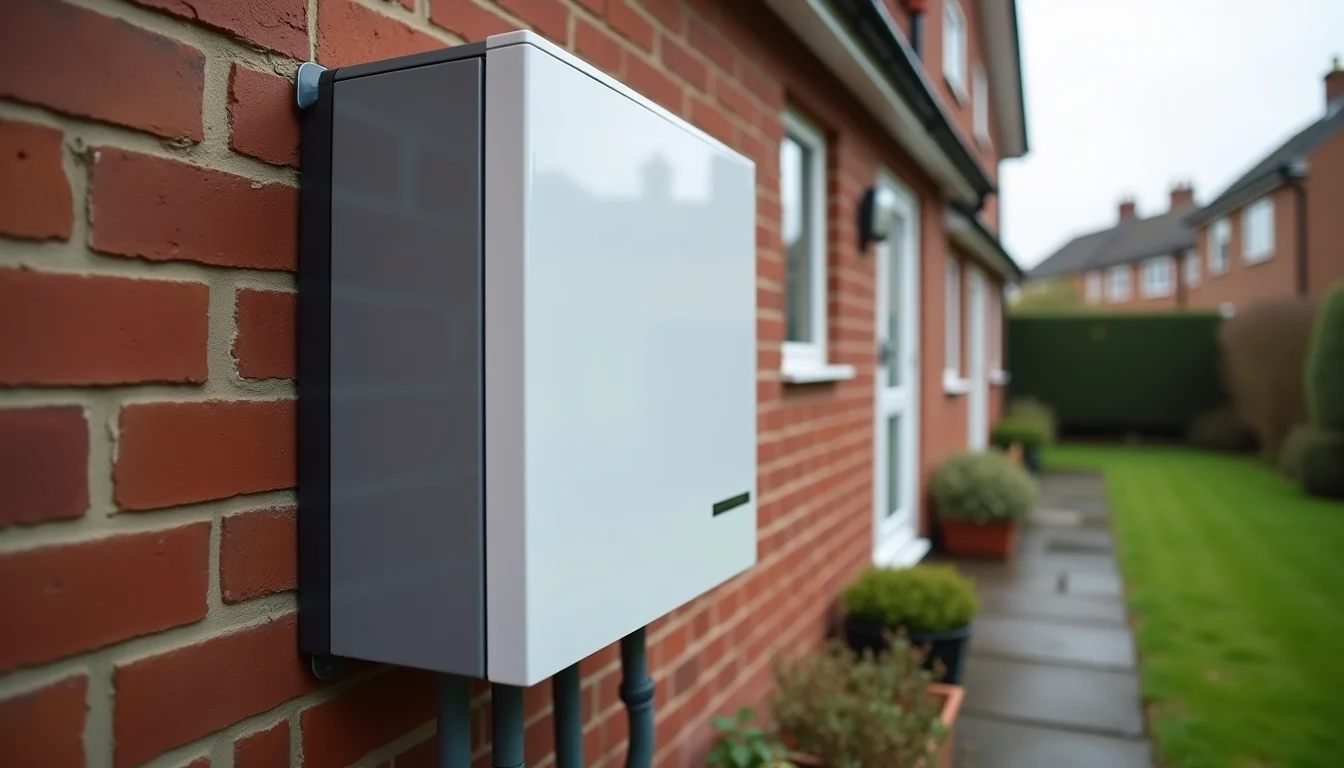
Most homeowners in England, Scotland, and Wales don't need planning permission to install an air source heat pump. They fall under permitted development rights, provided you meet a few straightforward conditions around size, placement, and noise. If you live in a listed building or a conservation area, the rules are stricter and you'll almost certainly need to apply.
What Are Permitted Development Rights for Heat Pumps?
Permitted development means you can carry out certain types of work on your property without submitting a formal planning application. The government specifically extended these rights to cover heat pumps because they want to speed up the shift away from gas boilers.
For air source heat pumps in England, the rules are set out under the Town and Country Planning (General Permitted Development) (England) Order 2015, as amended. In practice, this means most standard domestic installations on detached, semi-detached, and terraced houses go ahead without any planning paperwork at all.
But there are conditions attached. And if you don't meet every single one of them, you'll need to submit a planning application before your installer starts work.
What Conditions Must You Meet to Avoid Planning Permission?
Here's where you need to pay close attention. The permitted development conditions for air source heat pumps in England are:
- Only one air source heat pump is allowed on the property (including the garden).
- The unit must comply with MCS 020 planning standards, which set noise limits at the nearest neighbouring window.
- The volume of the outdoor unit (including the housing) must not exceed 0.6 cubic metres.
- The heat pump must be at least one metre from the property boundary.
- It must not be installed on a wall or roof that fronts a highway.
- If your home is a flat, the installation doesn't qualify for permitted development.
For ground source heat pumps, the rules are more relaxed because the equipment is buried underground. You won't normally need planning permission unless you're in a conservation area, a World Heritage Site, or on a listed building's grounds.
One thing people often miss: the noise condition. Your installer should carry out an MCS 020 noise assessment before the install. If the heat pump would exceed 42 decibels at the nearest neighbour's window, you either need to reposition the unit or apply for planning permission.
Do I Need Planning Permission for a Heat Pump in a Conservation Area or Listed Building?
This is where things get tighter. If your home is in a conservation area, an Area of Outstanding Natural Beauty, a National Park, or a World Heritage Site, permitted development rights are more restricted.
In these areas, you cannot install an air source heat pump on a wall or roof that faces a highway and is visible from that highway. That doesn't mean you can't install one at all. It just means you'll likely need to place it at the rear of the property, or apply for planning permission if rear placement isn't possible.
For listed buildings, the situation is different again. You'll almost always need both planning permission and listed building consent. The local planning authority will want to be satisfied that the installation won't harm the character or appearance of the building. Honestly, this can add weeks or even months to your project timeline, so start the process early.
Here's a real scenario: a homeowner in Bath wanted an air source heat pump on their Grade II listed Georgian townhouse. The council required a heritage impact assessment, details of how pipework would be routed through the building, and confirmation that the external unit wouldn't be visible from the street. It took about 14 weeks from application to approval, but it was granted.
How Do I Apply for Planning Permission for a Heat Pump?
If you do need to apply, the process is fairly standard. You submit a householder planning application through the Planning Portal (planningportal.co.uk) or directly to your local council.
You'll need:
- A completed application form.
- A site plan showing where the heat pump will be positioned.
- Elevations or drawings showing the unit's size and placement.
- An MCS 020 noise assessment (your installer can provide this).
- The application fee, which is currently £258 in England for a householder application.
Most councils aim to decide householder applications within eight weeks. In practice, straightforward heat pump applications often get decided faster, especially if your planning officer is familiar with them.
A good MCS certified installer will help you through this process. Many have dealt with planning applications before and can supply the technical drawings and noise data you'll need.
How Does the £7,500 BUS Grant Work Alongside Planning Permission?
The Boiler Upgrade Scheme (BUS) offers a £7,500 grant towards the cost of an air source or ground source heat pump in 2026. This grant is available in England and Wales and is applied for by your MCS certified installer on your behalf.
Here's the key point: you must have any required planning permission in place before your installer applies for the BUS voucher. Ofgem won't issue a voucher if the installation doesn't have the correct consents.
If your installation falls under permitted development, you don't need to prove anything extra to Ofgem. Your installer simply confirms that permitted development conditions are met as part of the MCS certification process.
But if you're in a listed building or conservation area and need formal planning approval, get that sorted first. Don't let your installer apply for the grant until you have the decision notice in hand. The BUS voucher is valid for three months once issued, and you don't want that clock ticking while you're still waiting on the council.
The grant knocks a significant chunk off the typical installed cost of £10,000 to £13,000 for an air source heat pump. For ground source systems, which often cost £15,000 to £25,000, the same £7,500 grant applies.
Will My Neighbours Object to a Heat Pump?
This is probably the most common worry homeowners have. And it's worth addressing head on.
Modern air source heat pumps are much quieter than people expect. Most units operate at around 40 to 50 decibels at one metre, which is roughly the volume of a fridge humming. At the boundary of your property, the sound level drops significantly.
The MCS 020 noise standard is specifically designed to protect neighbours. If your installation meets that standard, your neighbours have very little grounds to object, even if you do need to apply for planning permission.
That said, it's always worth having a quick chat with your neighbours before installation day. A five-minute conversation explaining what you're doing, where the unit will go, and how quiet it'll be can prevent complaints and awkward disputes later. People tend to object to things they don't understand.
If you're on a terraced street and the only viable position is close to a neighbour's window, talk to your installer about acoustic barriers or alternative placements. There's usually a solution.
Do the Rules Differ in Scotland and Wales?
Yes, and this catches people out.
In Scotland, permitted development rights for air source heat pumps are similar to England but not identical. The unit must not be installed on a wall or roof fronting a road, the volume limit is the same 0.6 cubic metres, and only one unit is permitted per property. Scotland uses its own planning legislation, so check with your local authority if you're unsure.
In Wales, the rules were updated in recent years to make heat pump installations easier. Permitted development conditions broadly mirror England, but Wales has its own planning portal and application process. The BUS grant also applies in Wales, on the same terms as England.
Northern Ireland has a separate planning system entirely and the BUS grant doesn't currently apply there. If you're in Northern Ireland, you'll need to check directly with your local council about planning requirements.
FAQs
Do you need planning permission for an air source heat pump UK?
In most cases, no. Air source heat pumps fall under permitted development in England, Scotland, and Wales as long as you meet conditions around size, noise, placement, and not being in a listed building. If you don't meet all the conditions, you'll need to apply.
Can I put a heat pump on the front of my house?
Not under permitted development. The rules state the heat pump must not be on a wall or roof that faces and is visible from a highway. Most homeowners install units at the side or rear of the property to avoid this restriction.
Do I need planning permission for a ground source heat pump?
Generally no, since the equipment is underground. Ground source heat pumps are permitted development in most situations. Exceptions include listed buildings, conservation areas, and some designated land. Check with your local council if your property falls into one of these categories.
How long does planning permission take for a heat pump?
Most householder planning applications are decided within eight weeks. Straightforward heat pump installations can sometimes be approved faster. For listed buildings, allow more time because you'll need listed building consent as well, which can add several weeks.
Do I need building regulations approval for a heat pump?
Yes, but this is separate from planning permission. All heat pump installations must comply with Building Regulations. If your installer is MCS certified, they'll handle the building regulations notification as part of the installation process, so you don't need to arrange a separate building control inspection.
Ready to get your heat pump installed without the headaches? Use our directory at heatpumpinstallerdirectory.co.uk to find a local MCS certified installer who can advise on planning requirements, handle the BUS grant application, and get your system up and running properly. It takes about 30 seconds to search, and every installer listed is MCS certified.
Ready to talk to an installer?
Every firm in the directory is MCS-certified, with reviews and grant registration shown on its listing.
Related guides
- Future Homes Standard 2026: What Heat Pumps Becoming Mandatory in New Builds Means for Existing Homeowners
The Future Homes Standard 2026 makes heat pumps mandatory in new builds. Here's why existing homeowners should act now before installer wait times spike.
- Boiler Upgrade Scheme Eligibility 2026 — Does Your Home Qualify?
Check every BUS grant eligibility rule for 2026 — property type, tenure, EPC changes, listed buildings, park homes and more. Find out if your home qualifies.
- Do Heat Pumps Work in Old Houses? The Complete Guide
Can you install a heat pump in a pre-1930s house? Yes. This guide covers solid walls, listed buildings, insulation fixes and real costs for older UK homes.