
Heat Pump for a Victorian Terrace: What You Need to Know
Can a Victorian terrace actually work with a heat pump? Yes, but there are pitfalls. Here's what real homeowners need to know before committing.

Written by Heat Pump Buddy
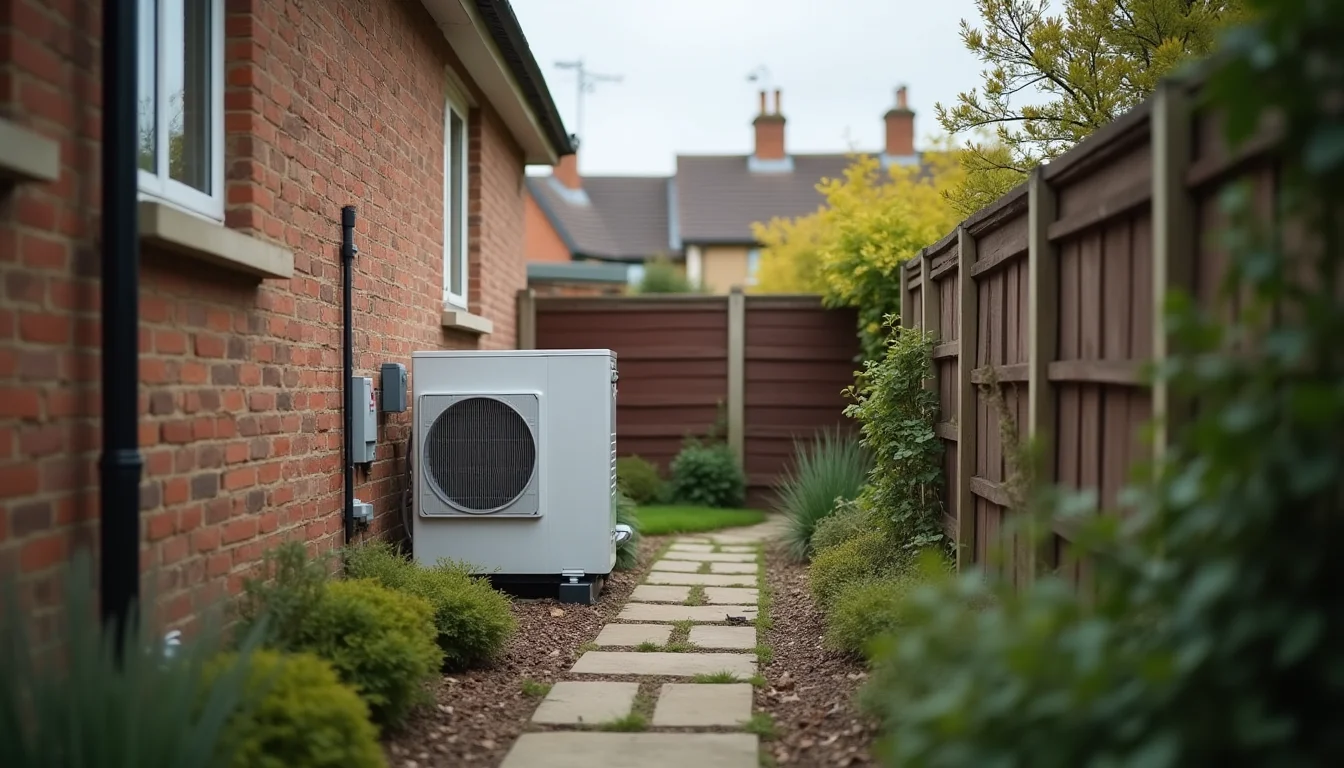
Yes, you can install a heat pump in a Victorian terrace, and thousands of UK homeowners have already done it. The main challenges are solid walls, tight outdoor spaces, and sometimes conservation area restrictions, but none of these are dealbreakers. With the right preparation and an experienced MCS certified installer, a Victorian terrace can run on a heat pump just as effectively as a new-build.
Why Are Victorian Terraces Trickier for Heat Pumps?
Victorian terraces weren't built with energy efficiency in mind. Most have solid brick walls with no cavity, which means heat escapes faster than in modern homes. That doesn't stop a heat pump from working, but it does mean you'll need to think carefully about insulation and system sizing.
The typical mid-terrace has a heat loss somewhere between 8kW and 14kW, depending on size, insulation, and how draughty it is. A detached house of similar floor area would often lose more heat because it has four exposed walls instead of two. That's actually a point in your favour.
The real sticking points tend to be practical. Where do you put the outdoor unit when your back yard is three metres wide? What about noise in a street where your neighbour's bedroom window is right next to your proposed install location? These are solvable problems, but they need proper planning.
Do You Need to Insulate a Victorian Terrace Before Installing a Heat Pump?
This is the single biggest question, and the honest answer is: it depends on how much you're willing to spend and how cold your house currently gets.
Internal wall insulation (IWI) can reduce heat loss through solid walls by around 50 to 60 percent. That's significant. But IWI costs between £5,000 and £15,000 depending on the size of your property and the method used, and it reduces room sizes by roughly 50 to 100mm per wall. For a narrow Victorian terrace, losing that space in every room is a genuine sacrifice.
External wall insulation (EWI) is usually more effective, but many Victorian terraces sit in conservation areas where altering the front facade isn't allowed. You might get permission for EWI on the rear wall only.
Here's what actually matters: a good installer will do a full heat loss survey and tell you what size heat pump you'd need with your current insulation. If a properly sized heat pump can keep your home at 21°C on the coldest day of the year, you might not need to insulate the walls at all. You should absolutely draught-proof, insulate your loft to at least 270mm, and consider underfloor insulation if you have suspended timber floors. These are cheap wins that make a real difference.
Frankly, the "you must insulate everything first" line gets repeated so often it puts people off entirely. A more honest approach is to do the affordable insulation measures first, then size the heat pump to the actual heat demand of your home.
Where Does the Heat Pump Unit Go on a Victorian Terrace?
Most air source heat pumps need the outdoor unit placed somewhere with decent airflow. On a Victorian terrace, the options are usually the back yard, a side return, or occasionally the front.
Back yards work well if there's enough clearance from boundary walls. The unit needs at least 300mm behind it and ideally 500mm or more of clear space in front for airflow. A compact unit like the Vaillant Aroetherm or Daikin Altherma 3 can fit comfortably in a yard that's two metres wide.
Side returns are another popular spot. That narrow alley between your house and the neighbour can work, provided there's enough ventilation and you're meeting planning rules on distance from boundaries.
Planning permission isn't usually needed for air source heat pumps in England and Wales thanks to permitted development rights, but there are specific conditions. The unit must be at least one metre from the property boundary. In conservation areas or on listed buildings, you'll need a full planning application. Check with your local council before committing.
Noise is worth mentioning. Modern heat pumps run at around 40 to 50 dB at one metre, which is roughly the level of a quiet conversation. But if your neighbour's window is 1.5 metres from the unit, they may notice it at night. Your installer should factor this in and might recommend acoustic screening or a quieter model.
Can You Keep Your Existing Radiators?
Often, yes. This is good news because ripping out every radiator in a Victorian terrace is messy, disruptive, and expensive.
Heat pumps run most efficiently at lower flow temperatures than gas boilers, typically around 35 to 45°C compared to 60 to 75°C. The concern is that your existing radiators might not put out enough heat at those lower temperatures.
But many Victorian terraces already have oversized radiators. Those big old cast iron rads that the Victorians loved actually have a large surface area, which means they can still heat a room effectively at lower flow temperatures. An installer will calculate whether each radiator can meet the room's heat demand at a flow temperature of around 45°C. Some rooms might need a larger radiator or an additional one, but a full replacement is rarely necessary.
If you do need to upgrade some radiators, budget around £200 to £400 per room for supply and fitting. Underfloor heating on the ground floor is another option that works brilliantly with heat pumps, especially if you're already planning to replace flooring.
How to Claim the £7,500 BUS Grant for a Victorian Terrace
The Boiler Upgrade Scheme (BUS) is still running in 2026 and provides a £7,500 grant towards the cost of an air source heat pump. The grant is applied directly by your installer, so it comes off your quote rather than being something you claim back.
To qualify, your home must have an EPC (valid within the last 10 years), you must own the property (or be a private landlord with the right tenure), and the installation must be done by an MCS certified installer. There's no requirement for your home to reach a specific EPC rating before you apply, which is important for Victorian terraces that often sit at D or E.
The total cost of a heat pump for a Victorian terrace, including the hot water cylinder, typically falls between £10,000 and £16,000 before the grant. After the £7,500 BUS grant, you're looking at roughly £2,500 to £8,500 out of pocket. That's comparable to a high-end gas boiler replacement once you factor in flue regulations and increased gas boiler installation costs in 2026.
One thing to watch: your installer needs to apply for the BUS voucher before starting work. If they begin the installation and then try to apply, you won't get the money. Make sure this is discussed and confirmed at the quotation stage.
"My Victorian Terrace Will Be Too Expensive to Run on a Heat Pump"
This is the objection that comes up most, and it deserves a straight answer.
Running costs depend on three things: your home's heat demand, the efficiency of the heat pump (its SCOP or Seasonal Coefficient of Performance), and the price you pay for electricity.
A well-installed heat pump in a reasonably insulated Victorian mid-terrace should achieve an SCOP of around 3.0 to 3.5. That means for every 1kWh of electricity it uses, it produces 3 to 3.5kWh of heat. At a typical electricity tariff of around 24p/kWh in 2026, that works out to roughly 7p per kWh of heat. Gas currently costs about 6 to 7p/kWh, but a gas boiler is only 90% efficient at best, making the effective cost around 7 to 8p per kWh of heat.
So running costs are broadly similar. If you're on a smart tariff and can shift some heating to off-peak hours, or if you have solar panels generating free electricity during the day, the heat pump can actually be cheaper.
Let's take a real example. A three-bedroom Victorian mid-terrace in south London with loft insulation, draught-proofing, and an 8.5kW air source heat pump. Annual heating and hot water demand of around 12,000kWh. With an SCOP of 3.2, that's about 3,750kWh of electricity, costing roughly £900 per year. The same house on gas with a condensing boiler would spend around £920 per year. Not a dramatic saving, but not the horror story some people expect.
And electricity prices are expected to continue falling relative to gas as more renewable generation comes online. The trend is firmly in the heat pump's favour.
Frequently Asked Questions
Can you put a heat pump on a Victorian terrace?
Absolutely. Victorian terraces, especially mid-terraces, are actually decent candidates because they only have two exposed external walls. The main considerations are where to place the outdoor unit and whether you need to upgrade any insulation. Thousands of Victorian terrace owners across the UK have already made the switch.
Do I need to insulate solid walls before getting a heat pump?
Not always. Loft insulation, draught-proofing, and floor insulation are the priority measures. A good installer will calculate your home's heat loss and size the heat pump accordingly. Solid wall insulation helps but isn't a strict requirement for the system to work or for BUS grant eligibility.
How much does a heat pump cost for a Victorian terrace in 2026?
Total installation costs typically range from £10,000 to £16,000, but with the £7,500 BUS grant, you'll pay between £2,500 and £8,500 out of pocket. The exact figure depends on the size of heat pump needed, any radiator upgrades, and the complexity of the installation.
Will a heat pump work with old cast iron radiators?
In many cases, yes. Cast iron radiators have a large surface area, which means they can still provide enough warmth at the lower flow temperatures a heat pump uses. Your installer will check each radiator against the room's heat demand and only recommend replacements where genuinely needed.
Do you need planning permission for a heat pump on a terraced house?
In most cases, no. Air source heat pumps fall under permitted development in England and Wales, provided they meet conditions on size, placement, and distance from boundaries. If your home is listed or in a conservation area, you will need to apply for planning permission. Always confirm with your local planning authority before proceeding.
Find a Local MCS Certified Heat Pump Installer
Getting the right installer is the single most important decision you'll make. A poorly designed system in a Victorian terrace will underperform and cost more to run, while a properly specified one will keep your home warm and your bills manageable. Use our directory at heatpumpinstallerdirectory.co.uk to find MCS certified installers near you who have experience with older properties, and get quotes from at least three before you commit.
Ready to talk to an installer?
Compare the listed firms, then check current MCS status, service coverage and any grant registration directly. Contact routes are shown when a firm has published one.
Related guides
- How Does a Heat Pump Work in Winter? A Practical Guide
Step-by-step explanation of how heat pumps extract warmth in freezing UK winters, including defrost cycles, backup heating, and tips to keep efficiency high.
- Do Heat Pumps Work With Existing Radiators?
Can you keep your existing radiators with a heat pump? Learn which radiators work, which need upgrading, and how flow temperature affects your heating system.
- Do Heat Pumps Work in Cold Weather in the UK?
Worried your heat pump won't cope with a UK winter? Here's how modern systems perform at sub-zero temperatures, plus practical tips to keep efficiency high.