
What Is an Air Source Heat Pump and How Does It Work? A Complete Guide
Find out exactly how an air source heat pump heats your home, what's inside one, and whether it'll work for your property. Plain English, no jargon.

Written by Heat Pump Buddy
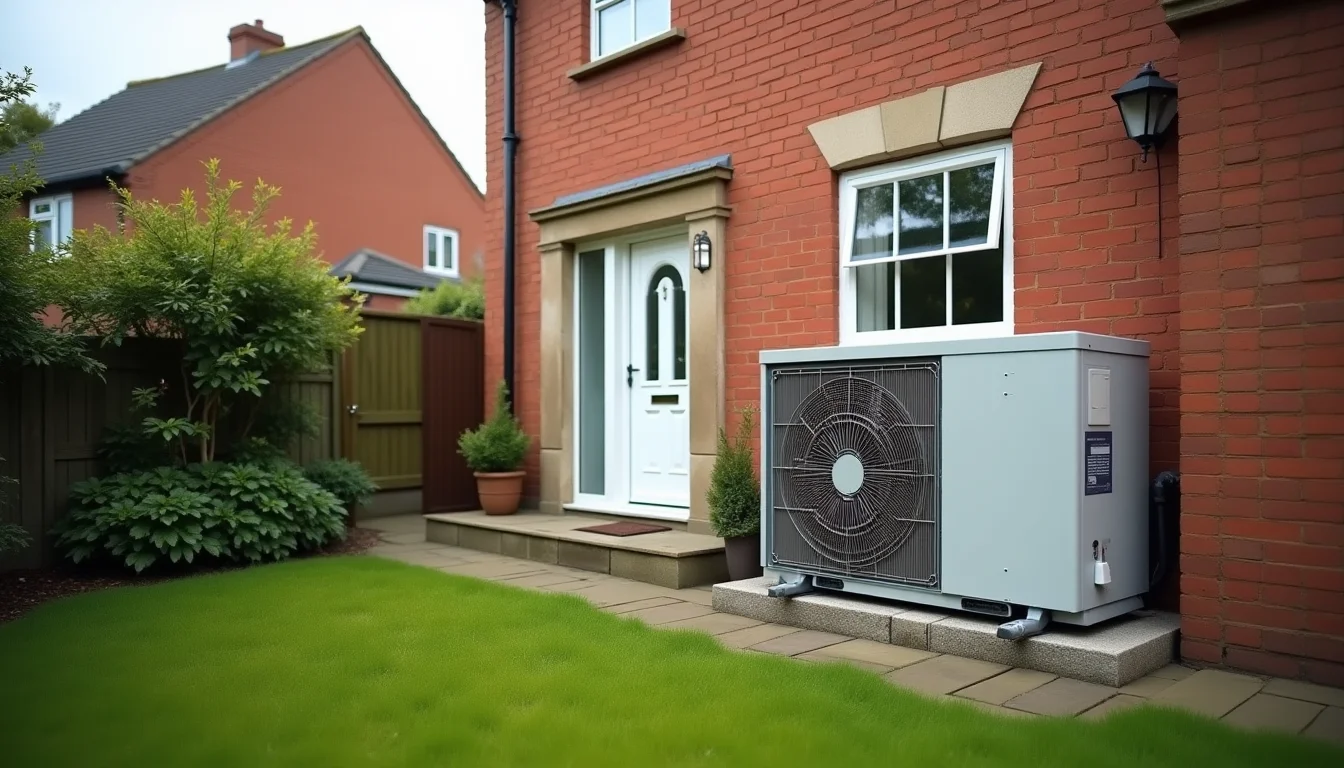
An air source heat pump (ASHP) is an electrically powered heating system that absorbs heat from the outside air and transfers it into your home to provide hot water and central heating. It works on the same principle as a fridge, but in reverse: instead of pulling heat out of a box, it pulls heat from outdoor air and pushes it indoors. Even when it's freezing outside, there's still enough thermal energy in the air for a heat pump to extract and use.
How Does an Air Source Heat Pump Actually Work?
Let's strip this right back. You don't need a physics degree to understand what's happening inside an ASHP. It follows four simple steps, repeated in a continuous loop.
Step 1: Evaporation. A fan draws outdoor air across a heat exchanger containing a refrigerant liquid with a very low boiling point (typically around minus 25°C to minus 30°C). Even on a cold January morning, the air is warmer than this refrigerant, so the refrigerant absorbs heat and turns into a gas.
Step 2: Compression. An electrically powered compressor squeezes that gas into a much smaller space, which dramatically increases its temperature. Think of how a bicycle pump gets warm at the end when you pump hard. The same principle applies here, and the gas can reach temperatures of 60°C to 75°C.
Step 3: Condensation. The hot gas passes through a second heat exchanger inside your home. It transfers its heat to your central heating water, warming your radiators or underfloor heating. As the gas loses its heat, it cools and condenses back into a liquid.
Step 4: Expansion. The liquid refrigerant passes through an expansion valve, which drops its pressure and temperature right back down. It's now cold enough to absorb heat from the outside air again, and the whole cycle starts over.
That's genuinely it. No combustion, no gas flame, no flue. Just a continuous loop of evaporation, compression, condensation, and expansion.
What Are the Main Components Inside an ASHP?
Knowing the basic parts helps you understand what your installer is talking about and what might need attention in years to come.
The outdoor unit is the bit you'll see mounted on brackets or sat on a concrete plinth outside your house. It contains the fan, the evaporator coil, and the compressor. It's roughly the size of a large suitcase, though some models are bigger.
Inside your home, you'll typically have a hot water cylinder (unless you've got a newer air-to-air system), a controller or thermostat, and the pipework connecting everything. Some systems include a buffer tank to store heated water and reduce how often the compressor cycles on and off, which helps efficiency.
The refrigerant is the lifeblood of the system. Most modern ASHPs in 2026 use R290 (propane), which has a much lower global warming potential than older refrigerants like R410A. It's a shift the industry has been making for a few years, and nearly all new models now use it.
How Efficient Is an Air Source Heat Pump in Real UK Conditions?
This is where heat pumps really earn their keep. Efficiency is measured using something called the Coefficient of Performance (COP). A COP of 3.0 means for every 1 kWh of electricity the heat pump uses, it produces 3 kWh of heat. You're getting three times more energy out than you put in.
In real UK homes, seasonal average COPs (known as SCOP or SPF) typically land between 2.8 and 3.5, depending on the system design, the home's insulation, and how low the flow temperature runs. Underfloor heating, which works at lower temperatures, tends to push performance towards the higher end.
Let's put some numbers on this. With electricity currently sitting around 24.5p per kWh (Ofgem price cap, Q2 2026) and a seasonal COP of 3.0, your effective cost per kWh of heat is about 8.2p. Compare that to a gas boiler running at 90% efficiency with gas at roughly 6.8p per kWh, giving you an effective cost of about 7.5p per kWh of heat. The gap is tight, and as gas prices fluctuate and electricity prices are projected to fall with more renewable generation, the economics are shifting in the heat pump's favour.
Frankly, the bigger savings come if you're replacing oil, LPG, or direct electric heating. A rural homeowner swapping an oil boiler could save £500 to £900 a year on fuel bills, even before factoring in the grant.
Do Air Source Heat Pumps Work in Cold Weather?
This is the single biggest concern homeowners raise, and it's a fair question. The short answer: yes, they work in cold weather. Modern ASHPs are rated to operate down to minus 15°C or even minus 20°C. The lowest temperature ever recorded in England was minus 26.1°C, back in 1982, and we very rarely see anything below minus 10°C.
Performance does drop as temperatures fall. At 7°C outside, your heat pump might achieve a COP of 4.0. At minus 5°C, that might dip to 2.0 or 2.5. But it keeps working. Scandinavian countries, where winters are far harsher than ours, have been installing heat pumps in huge numbers for over a decade.
The key to good cold-weather performance is proper sizing. Your installer should carry out a full heat loss calculation for your home, making sure the unit can deliver enough heat on the coldest days. A well-designed system won't struggle. A poorly designed one will. That's why choosing an MCS certified installer matters so much.
Can You Get the £7,500 BUS Grant for an Air Source Heat Pump?
Yes. The Boiler Upgrade Scheme (BUS) provides a £7,500 grant towards the cost of installing an air source heat pump in England and Wales. The scheme is confirmed to run until at least March 2028, so there's no need to rush, but there's also no reason to wait.
To qualify, your home needs to have a valid Energy Performance Certificate (EPC) with no outstanding loft or cavity wall insulation recommendations (unless there's a legitimate reason they can't be done). The property must be an existing building, not a new build. And the installation must be carried out by an MCS certified installer.
The grant is paid directly to the installer, so it comes straight off your quote. A typical ASHP installation costs between £10,000 and £14,000 before the grant, bringing the out-of-pocket cost down to roughly £2,500 to £6,500 depending on the complexity of your home. For a three-bed semi with existing radiators, you're often looking at around £4,000 to £5,000 after the grant.
You can check your eligibility and find an MCS certified installer local to you on our directory.
Is an Air Source Heat Pump Right for Your Home?
Not every home is an ideal candidate, and anyone who tells you otherwise isn't being straight with you. But the vast majority of UK homes can have one fitted.
You'll need outdoor space for the unit, typically about a metre out from an external wall with enough clearance for airflow. Terraced houses can be trickier, but not impossible. The unit does produce some noise, roughly comparable to a quiet conversation or a modern fridge, so placement matters if you've got nearby neighbours.
Homes with solid walls and poor insulation can still benefit, but you'll want to address the worst of the heat loss first. Draught-proofing, loft insulation, and even just upgrading a few key radiators to larger ones can make a real difference to how well the system performs.
Here's a real scenario. A family in a 1960s detached house in Nottinghamshire replaced their oil boiler with a 10kW ASHP in early 2026. They upgraded four radiators, added loft insulation, and the total cost after the £7,500 BUS grant was £5,200. Their heating bills dropped by around £650 a year compared to oil, and the house feels more evenly heated because the system runs at a lower, steadier temperature throughout the day.
Frequently Asked Questions
How does an air source heat pump work in simple terms?
An air source heat pump uses electricity to absorb heat from the outside air, compress it to a higher temperature, and transfer it into your home's heating and hot water system. It works like a fridge in reverse. Even in cold weather, there's enough heat in the air for the system to work.
Do air source heat pumps work below zero?
Yes. Modern air source heat pumps are designed to operate effectively at temperatures well below zero, typically down to minus 15°C or lower. Efficiency reduces as temperatures drop, but the system continues to produce heat throughout a UK winter.
How much does an air source heat pump cost to run per year UK?
For a typical three-bedroom UK home, annual running costs for an ASHP are around £900 to £1,200, based on 2026 electricity prices. This is comparable to gas in many cases and significantly cheaper than oil, LPG, or direct electric heating.
Are air source heat pumps noisy?
Modern ASHPs produce around 40 to 45 decibels at one metre distance, which is about the same volume as a quiet library or a humming fridge. Proper placement away from bedroom windows and neighbouring properties keeps noise well within acceptable levels.
Can I get an air source heat pump with radiators?
Absolutely. Most ASHP installations in the UK use existing radiators. In some cases, a few radiators may need upsizing to work efficiently at the lower flow temperatures a heat pump produces, but a full replacement of every radiator is rarely necessary.
Find a Local MCS Certified Installer
If you're considering an air source heat pump for your home, the most important step is getting advice from a qualified installer who can assess your property properly. Use our directory at heatpumpinstallerdirectory.co.uk to find MCS certified heat pump installers in your area, compare options, and take advantage of the £7,500 BUS grant while it's available.
Ready to talk to an installer?
Every firm in the directory is MCS-certified, with reviews and grant registration shown on its listing.
Related guides
- Do Heat Pumps Work in Old Houses? The Complete Guide
Can you install a heat pump in a pre-1930s house? Yes. This guide covers solid walls, listed buildings, insulation fixes and real costs for older UK homes.
- Air Source vs Ground Source Heat Pump: How to Choose the Right System for Your Home
Air source or ground source heat pump? This practical guide helps UK homeowners choose the right system based on budget, garden size, and BUS grant eligibility.
- How to Install a Heat Pump in a Small Garden or Tight Space
Think your garden's too small for a heat pump? Think again. Here's how UK homeowners are fitting heat pumps into the tightest spaces and still claiming £7,500.