
What to Expect on Heat Pump Installation Day
Wondering what happens on heat pump installation day? Get an hour-by-hour walkthrough covering prep, disruption, commissioning, and the questions to ask your installer.

Written by Heat Pump Buddy
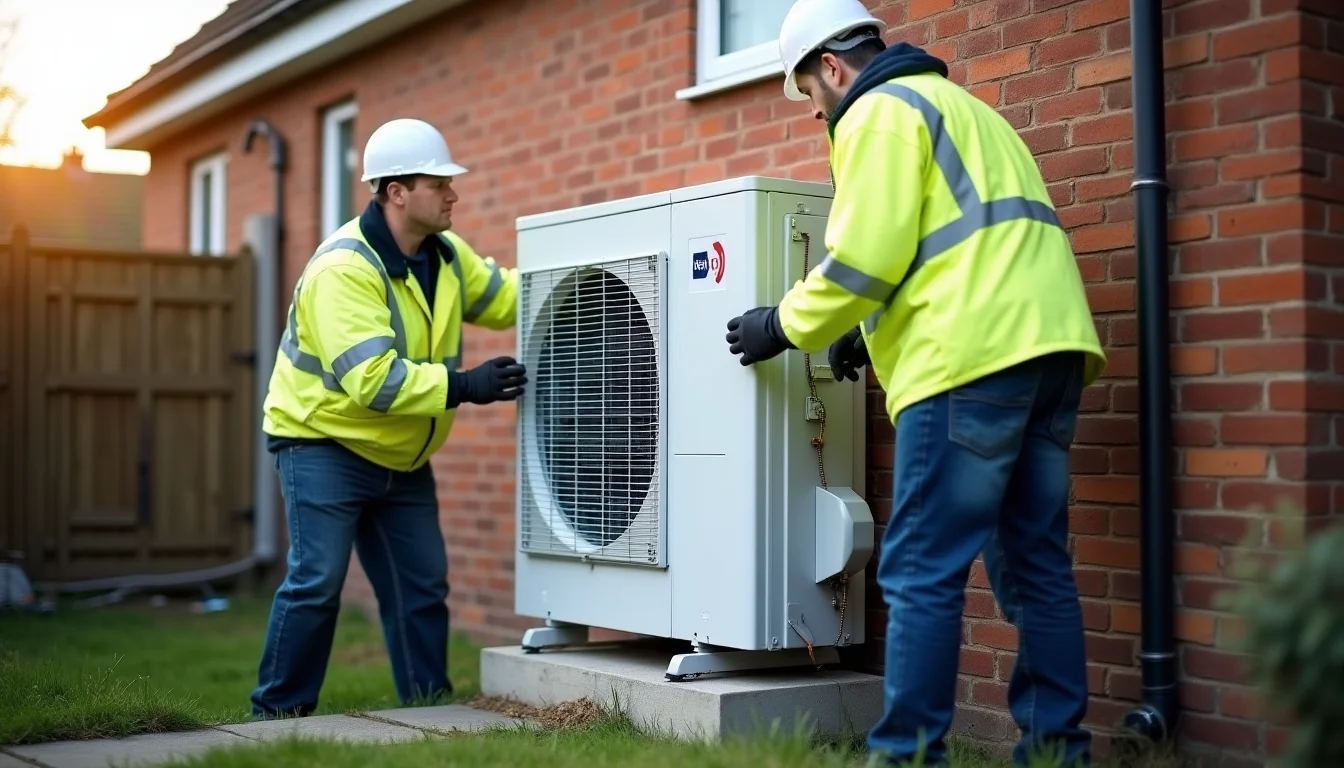
A typical air source heat pump installation takes one to three days, with the first day being the busiest. You'll have a team of two to four engineers working both inside and outside your home, and you should expect your heating and hot water to be off for most of that first day. By the end of the process, they'll commission the system, walk you through the controls, and leave you with a fully working heat pump.
How Should You Prepare Your Home Before the Engineers Arrive?
Your installer should send you a preparation checklist a week or so before the scheduled date. If they don't, chase them for one. A bit of effort the evening before will make the whole day run smoother for everyone.
Outside, clear the area where the heat pump unit will sit. That means moving plant pots, garden furniture, bins, and anything else within about two metres of the planned location. The engineers need room to work around the unit and route pipework through the external wall. If you've got a dog, make sure it can be kept away from the work area.
Inside, clear a path from your front door to wherever the indoor components will go. That's usually the utility room, airing cupboard, or the spot where your old boiler currently sits. Move anything breakable, and if you've got carpets in the hallway, consider putting down dust sheets yourself. Good installers will bring their own floor protection, but there's no harm in being cautious.
Have the kettle ready. Seriously. A couple of rounds of tea goes a long way.
What Happens Hour by Hour on Installation Day?
Every install is slightly different, but here's roughly how a standard air source heat pump installation plays out on day one.
7:30 to 8:30 AM: Arrival and setup
The team will arrive, usually in two vans. They'll introduce themselves, confirm the plan, and start unloading equipment. Expect a heat pump unit, a hot water cylinder, pipework, fittings, electrical components, and a concrete plinth or anti-vibration mounts. They'll lay down floor protection and set up their tools.
8:30 to 10:30 AM: External groundwork and plinth
If a concrete plinth hasn't been pre-poured (some installers do this on a separate visit), they'll set it up now using a pre-cast slab or adjustable feet. The outdoor unit needs to sit on a stable, level surface. While one pair of engineers handles the outside, another will start work inside, usually draining down and disconnecting your old boiler if it hasn't been removed already.
10:30 AM to 1:00 PM: Pipework and connections
This is the noisiest part. Engineers will drill through external walls to route refrigerant or water pipes (depending on whether it's a monobloc or split system). You'll hear core drilling, which sounds like an aggressive dentist. If you're working from home, this is the time to take a long lunch or move to the room furthest from the work.
Inside, they'll be connecting pipework to your existing radiator circuit or fitting a new hot water cylinder. If you need a buffer tank or low-loss header, that goes in during this phase too.
1:00 to 2:00 PM: Lunch break
The team will stop for lunch. Your heating will definitely be off at this point.
2:00 to 4:30 PM: Electrical work and wiring
A qualified electrician (either part of the team or a subcontractor) will wire the heat pump to your consumer unit. Air source heat pumps typically need a dedicated circuit, and some larger units require a 32-amp supply. They'll also wire up the controller unit, any smart thermostat, and the immersion heater backup in the cylinder.
4:30 to 6:00 PM: Filling, pressure testing, and initial checks
The system gets filled with water and pressurised. Engineers will check every joint for leaks, bleed radiators, and make sure the pressure holds. On a straightforward install, they may get to commissioning on day one. More often, commissioning happens on day two.
Don't be alarmed if the team runs past 6 PM. Installers generally want to get the system to a safe stopping point before they leave.
What Happens on Day Two (and Is There a Day Three)?
Day two is usually shorter, perhaps four to six hours. This is when the installer completes the commissioning process.
Commissioning means switching the heat pump on, checking the flow temperatures, testing heating and hot water, and adjusting the system settings. The installer will set your weather compensation curve, which tells the heat pump how to adjust its output based on outdoor temperatures. This is one of the most important steps. A poorly set curve means higher running costs.
For some homes, there's a day three. This isn't unusual if the installation involves fitting new radiators, underfloor heating manifolds, or if the electrician is scheduled separately. Your installer should have told you the expected timeline during the survey stage. If you want to understand what that survey covers, have a look at our guide on what a heat pump survey involves.
What Should You Ask at Handover and Commissioning?
The handover is your chance to understand your new system properly. Don't let the engineers leave until you're comfortable with how everything works.
Here are the questions worth asking:
- What flow temperature has the system been set to? For an air source heat pump, this should typically be between 35°C and 45°C. If it's set to 55°C or above, ask why, because running at high flow temperatures kills efficiency.
- How do I adjust the heating schedule? Get them to show you on the actual controller, not just point you to a manual.
- What's the weather compensation set to, and should I change it seasonally? Some systems auto-adjust, others need a manual tweak.
- Is the legionella cycle set up on the hot water cylinder? The cylinder needs to hit 60°C periodically to kill bacteria. This should already be programmed.
- Who do I call if something goes wrong? Get a direct number, not just a generic office line. And confirm whether the manufacturer's warranty has been registered.
- Where are the MCS and commissioning certificates? Your installer must provide an MCS certificate. You'll need it to claim the Boiler Upgrade Scheme grant and it's also needed if you sell your home.
A good installer will spend at least 30 minutes on the handover. If they're rushing to get away, that's a red flag. Our guide on red flags when hiring a heat pump installer covers this and other warning signs.
How the £7,500 BUS Grant Affects Your Installation Day
The Boiler Upgrade Scheme provides a £7,500 grant towards the cost of an air source heat pump in England and Wales. You don't receive this money yourself. Instead, your MCS certified installer applies for it and deducts it from your invoice.
On installation day itself, the grant doesn't change what happens physically. But it does affect the paperwork. Your installer needs to have applied for and received a voucher from Ofgem before the work begins. If they haven't got the voucher confirmed, do not let them start the installation. Once the work is complete, the installer redeems the voucher and Ofgem pays them directly.
To put some real numbers on this: a couple in a three-bedroom 1960s semi in Kent might be quoted £12,500 for a 9kW air source heat pump, a 210-litre cylinder, and three upgraded radiators. With the £7,500 BUS grant deducted, they'd pay £5,000 out of pocket. If they chose to spread that cost with finance, monthly payments could be under £100 over five years.
The grant is available through to March 2028 based on current government commitments, though the budget is allocated on a first-come, first-served basis. In 2026, demand has been rising steadily, so don't assume it'll be there indefinitely.
Will the Installation Disrupt My Daily Life?
This is the thing most people worry about, and it's worth being honest: yes, installation day is disruptive. But it's manageable.
You won't have heating or hot water for most of day one. If your install is in winter, plan for this. Have some portable electric heaters on standby. Fill a flask with hot water before the engineers drain the system.
The noise is the biggest issue. Core drilling through a brick wall is loud. Really loud. If you've got a baby who naps during the day or you're on video calls, you'll want to make other arrangements. Most of the heavy noise is concentrated in a two to three hour window.
Dust is another consideration. Drilling through walls creates masonry dust, and despite best efforts, some of it gets into the house. Good installers will use dust sheets and vacuum up at the end of each day, but expect to do a proper clean yourself afterwards.
If you have neighbours in a semi-detached or terraced house, give them a heads-up. They'll appreciate the warning about the drilling, and MCS standards require the outdoor unit to meet noise limits at the property boundary. The permitted development rules also set a 42 dB limit at the nearest neighbour's window.
By day two or three, life goes back to normal. And once the system is commissioned, it runs quietly in the background. Most homeowners say they forget the outdoor unit is even there within a week.
Frequently Asked Questions
How long does a heat pump take to install from start to finish?
Most air source heat pump installations take one to three days. A straightforward swap in a home with compatible radiators can be done in a single long day. More complex jobs involving new pipework runs, cylinder replacements, or radiator upgrades typically take two to three days. For a full timeline breakdown, see our installation timeline guide.
Do I need to be at home during heat pump installation?
Yes, you should be home or have someone available throughout the installation. The engineers will need access to multiple rooms, and they may need to ask you questions about your preferences for thermostat placement, cylinder location, or pipe routing. You'll also need to be present for the handover and commissioning.
Will my heating be off during heat pump installation?
Your heating and hot water will be off for most of the first day, and possibly into day two. The old system needs to be drained and disconnected before the new one can be connected. Plan ahead by having portable heaters available and filling a flask or two before the work starts.
What mess does heat pump installation make?
The main mess comes from core drilling through external walls, which creates brick or stone dust. There will also be some disruption in the room where indoor components are fitted. Professional installers lay dust sheets and clean up at the end of each day, but expect to do your own vacuum and wipe-down afterwards.
Do heat pump installers need to dig up my garden?
For an air source heat pump, no significant digging is needed. The outdoor unit sits on a pre-cast concrete plinth or adjustable feet on a hard, level surface. There may be minor excavation to route a condensate drain. Ground source heat pumps are a different matter entirely and require either trenches or boreholes, which is a much larger project.
If you're ready to get quotes from MCS certified installers in your area, find trusted heat pump installers near you and compare prices before you commit.
Ready to talk to an installer?
Compare the listed firms, then check current MCS status, service coverage and any grant registration directly. Contact routes are shown when a firm has published one.
Related guides
- Red Flags When Hiring a Heat Pump Installer
Spot the warning signs of a bad heat pump installer before you sign anything. Missing MCS docs, no heat loss survey, suspiciously cheap quotes and more.
- Questions to Ask a Heat Pump Installer Before Hiring
Don't sign a heat pump contract until you've asked these questions. A practical checklist to sort good MCS installers from cowboys in 2026.
- What Insurance Should a Heat Pump Installer Have? Essential Cover Explained
Find out exactly what insurance a heat pump installer should carry before you hire them. Public liability, indemnity, MCS rules and more.