
Warm Homes: Local Grant 2026 — The Complete Homeowner Guide
Warm Homes: Local Grant 2026 explained for UK homeowners. Eligibility, income thresholds, funded measures including heat pumps, and how to apply through your council.

Written by Heat Pump Buddy
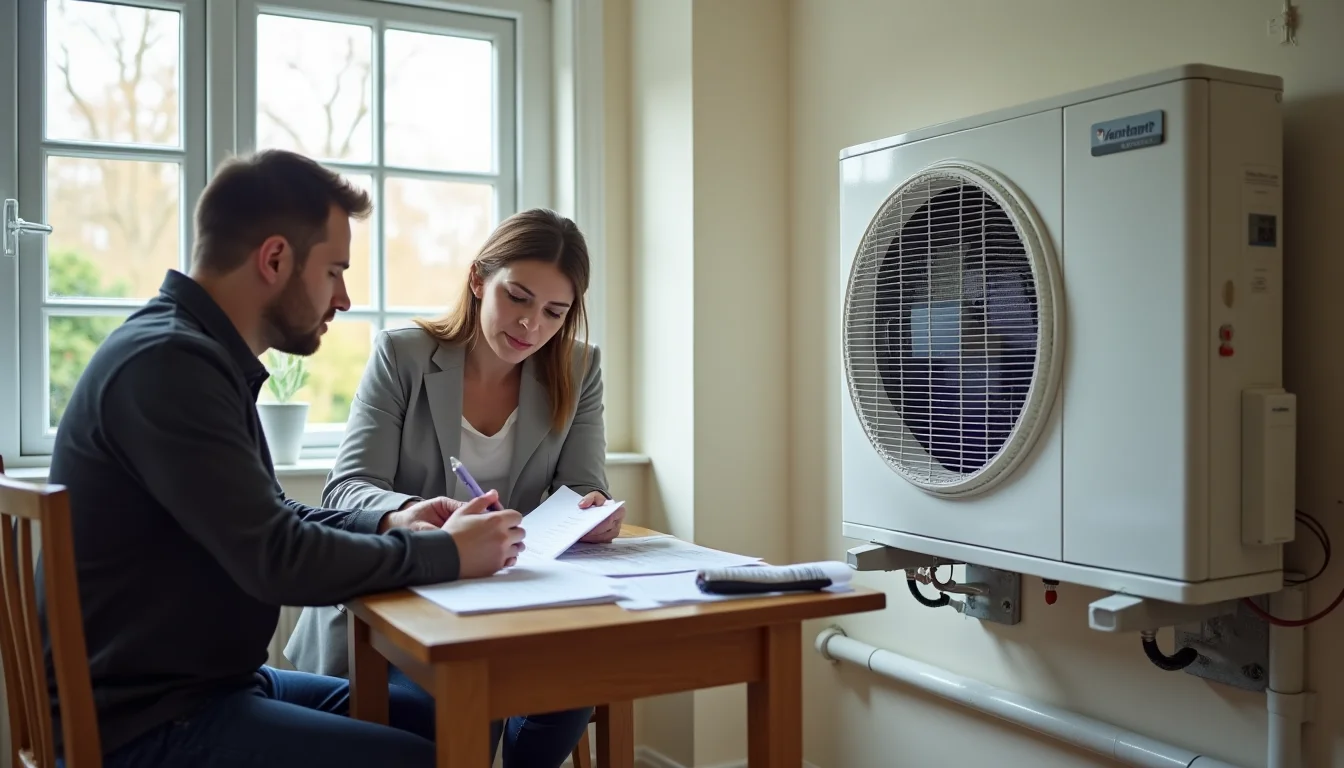
The Warm Homes: Local Grant is the government's council-delivered scheme that funds insulation, heating upgrades, and heat pump installations for lower-income homeowners in England. It replaced the older ECO4 and HUG2 programmes and is now the main route for households on modest incomes to get free or heavily subsidised energy efficiency work. If your household income is under £36,000 and your home has an EPC rating of D or below, you're likely eligible.
What is the Warm Homes: Local Grant and who runs it?
The Warm Homes: Local Grant sits under the broader Warm Homes Plan, the government's long-term strategy to upgrade the UK's housing stock. But unlike the Boiler Upgrade Scheme, which any homeowner can apply for directly, this grant is administered by your local authority. Your council decides which neighbourhoods to target, which contractors to use, and how the funding gets allocated in your area.
The scheme launched in 2026 after DESNZ confirmed the transition from ECO4 and HUG2. According to gov.uk guidance on the Warm Homes Plan, the local grant strand is specifically aimed at fuel-poor households and those most vulnerable to cold homes. The government has committed around £3.4 billion over this parliament to warm homes measures, with a significant portion flowing through local authorities.
This matters because your experience of the scheme depends heavily on where you live. Some councils have been proactive, running outreach campaigns and setting up referral partnerships with housing associations. Others are still getting their delivery plans in place. If you haven't heard anything from your council yet, it doesn't mean the funding isn't available. It might just mean you need to contact them directly.
Warm Homes: Local Grant eligibility — do you qualify?
There are two main tests: your household income and your home's energy performance.
Income threshold: Your total gross household income must be £36,000 or below. That's the combined income of everyone living in the property, not just the homeowner. Some councils may set a lower threshold depending on local demand and budget, so check with yours. Households receiving means-tested benefits like Universal Credit, Pension Credit, or income-based ESA will typically qualify automatically without a full income assessment.
EPC threshold: Your home needs an EPC rating of D, E, F, or G. Homes already rated C or above are generally excluded, since the scheme prioritises the worst-performing properties. If you don't have a current EPC, your council or their appointed assessor will arrange one as part of the application process. You can check your existing EPC for free on the Energy Performance Certificate register.
Tenure: Owner-occupiers and private tenants can both qualify. If you're a tenant, your landlord will need to give consent for the work and may be asked to contribute towards the cost. Social housing tenants are generally covered through separate obligations on housing associations.
Property type: There's no strict exclusion by property type. Detached houses, semi-detached, terraces, bungalows, and flats can all qualify. Park homes are eligible too, which is a change from some earlier schemes that excluded them.
One thing people often get wrong: you don't need to be on benefits to qualify. If you're a working household earning under £36,000, you're in scope. The scheme is designed to reach the "able to pay a bit but not enough" group that previous schemes sometimes missed.
Which measures does the Warm Homes: Local Grant fund?
The scheme covers a wide range of energy efficiency and heating measures. Your council's assessor will visit your home and recommend what's appropriate based on your property's condition and current heating system.
Insulation measures:
- Loft insulation (top-up or full)
- Cavity wall insulation
- External or internal wall insulation for solid-walled homes
- Underfloor insulation
- Room-in-roof insulation
Heating measures:
- Air source heat pumps
- Ground source heat pumps
- Solar thermal panels
- High-efficiency boilers (in limited circumstances where a heat pump isn't suitable)
- First-time central heating systems
Other measures:
- Draught-proofing
- Smart heating controls
- Hot water tank insulation
- Solar PV (usually only alongside another measure)
Heat pumps are a key part of the scheme. If you're in a home with an old gas boiler rated E or below, or you're on oil, LPG, or electric storage heaters, a heat pump installation could be fully funded. The typical value of a Warm Homes: Local Grant package is between £10,000 and £25,000, depending on what your home needs. For a solid-walled property needing external wall insulation plus a heat pump, the package can reach the higher end of that range.
Want to understand how air source heat pumps actually work? Our guide on what an air source heat pump is and how it works covers the basics clearly.
How does the Warm Homes: Local Grant differ from the BUS grant?
This trips people up, so let's be blunt about the differences.
The Boiler Upgrade Scheme is a universal grant. Any homeowner in England or Wales can apply regardless of income, as long as they meet the property criteria. It gives you a fixed amount off the cost of a heat pump: £7,500 for most homes, or £9,000 if you're replacing oil or LPG heating. You choose your own MCS certified installer, they apply on your behalf, and you pay the remaining balance.
The Warm Homes: Local Grant works differently. Your council manages the whole process. You don't choose your own installer; the council appoints approved contractors. The grant can cover the full cost of the work, so you may pay nothing at all. But you must meet the income and EPC criteria.
Here's the critical question many homeowners ask: can you get both? Generally, no. The Warm Homes: Local Grant and BUS are designed as separate routes. If you qualify for the local grant and it covers a heat pump, BUS won't be stacked on top. But if you don't meet the income criteria for the local grant, BUS remains available to you. Our guide on combining the BUS grant with other schemes goes into more detail on this.
| Warm Homes: Local Grant | Boiler Upgrade Scheme | |
|---|---|---|
| Income test | Yes, £36,000 or below | No |
| EPC requirement | D or below | No EPC requirement from April 2026 |
| Who applies | Council manages it | Your MCS installer applies |
| Cost to homeowner | Often nothing | You pay the balance after grant |
| Choose your installer | No, council appoints | Yes, you choose |
| Covers insulation | Yes | No, heating only |
| Available in | England | England and Wales |
How the £7,500 BUS Grant works alongside the Warm Homes: Local Grant
If your household income is above £36,000, the Warm Homes: Local Grant won't be an option. But the BUS grant is still there for you. Since April 2026, the scheme has been expanded: the standard grant is £7,500 for air source or ground source heat pumps, rising to £9,000 for homes currently on oil, LPG, or coal heating. The EPC requirement has also been dropped, so you no longer need a valid certificate to apply.
To give you a real sense of the numbers: take a 1930s three-bed semi in Leeds with an old gas boiler. An MCS certified installer quotes £12,500 for a 9kW air source heat pump, including a new hot water cylinder, upgraded controls, and all pipework. The homeowner earns £45,000 so doesn't qualify for the Warm Homes: Local Grant. They apply through BUS and receive the £7,500 grant. Their out-of-pocket cost: £5,000. Spread over the 20-year lifespan of the heat pump, that's £250 a year, and their gas bill disappears entirely.
The BUS grant is applied for by your installer, not you. You pick an MCS certified heat pump installer, they survey your home, provide a quote, and submit the application to Ofgem. The voucher is issued within a few weeks, and the grant amount is deducted from your invoice. You can read more about the full BUS process step by step.
Step-by-step: how to apply for the Warm Homes: Local Grant
Step 1: Check your eligibility. Confirm your household income is £36,000 or below and your EPC is D or worse. If you're on qualifying benefits, gather proof (award letters, Universal Credit statements).
Step 2: Contact your local authority. Search for your council's name plus "Warm Homes Local Grant" or "home energy scheme." Most councils have a dedicated landing page or phone line. Some areas use a regional hub covering multiple councils, so don't be surprised if you're directed to a neighbouring authority's team.
Step 3: Complete the referral form. You'll need to provide your address, household details, income evidence, and information about your current heating system. Some councils accept self-referrals online. Others require a phone call. A few areas also accept referrals from GPs, social workers, or housing officers if you're classed as vulnerable.
Step 4: Home assessment. A qualified assessor visits your property to carry out an energy survey. They'll check insulation levels, look at your boiler or heating system, inspect windows and doors, and lodge a new EPC if needed. This visit is free.
Step 5: Receive your offer. Based on the assessment, the council will tell you which measures they're recommending and what the scheme will cover. For most qualifying households, the full cost is funded. In some cases, there may be a small contribution required, particularly for private tenants where the landlord is expected to co-fund.
Step 6: Installation. The council's approved contractor schedules the work. For insulation, this might take a few days. For a heat pump installation, expect one to three days for a straightforward air source system. The contractor must be MCS certified for any heat pump work, and all installations are subject to quality inspections.
Step 7: Post-installation check. An independent inspector may visit after the work is complete to verify quality. You'll receive updated EPC documentation and any relevant warranties.
The whole process from first contact to completed installation typically takes 8 to 16 weeks, though this varies by council. Some areas with high demand have longer waiting lists.
"I'm worried my council won't have the funding left"
This is the most common concern we hear, and it's understandable. Previous schemes like HUG2 ran out of money in some local authority areas before all eligible households could be helped. And because each council gets a fixed allocation, there's a real risk of exactly the same thing happening again.
So what can you do about it? Apply early. Don't wait for a leaflet through your door. Contact your council now, get on their list, and provide all the information they ask for promptly. Councils prioritise households in the worst conditions: those with broken heating, on prepayment meters, or in EPC F and G homes. If that's you, say so clearly.
If your council has already allocated its current round of funding, ask to be put on a waiting list for the next tranche. The government releases funding in phases, and councils that demonstrate strong delivery tend to receive additional allocations. The Energy Saving Trust maintains an up-to-date overview of available support by area.
And if the local grant route doesn't work out, don't assume you're stuck. The BUS grant, council tax rebates, and energy company obligation schemes may still be available to you. Check our full overview of every UK heat pump grant to see what else applies.
Frequently asked questions
What is the Warm Homes Local Grant 2026?
The Warm Homes: Local Grant is an English government scheme delivered by local councils that provides free or subsidised insulation and heating upgrades, including heat pumps, to lower-income homeowners and tenants. It replaced the earlier ECO4 and HUG2 programmes and is the council-delivered strand of the wider Warm Homes Plan.
Who is eligible for the Warm Homes Local Grant?
You're eligible if your household income is £36,000 or below and your home has an EPC rating of D, E, F, or G. Households receiving means-tested benefits like Universal Credit or Pension Credit typically qualify automatically. Both owner-occupiers and private tenants can apply.
Can I get a free heat pump through the Warm Homes Local Grant?
Yes, if your home is assessed as suitable for a heat pump and you meet the eligibility criteria, the full cost of supply and installation can be covered. Your council's assessor will determine whether a heat pump is the right measure for your property based on its age, construction, and current heating system.
How do I apply for the Warm Homes Local Grant?
You apply through your local council, not directly to the government. Search your council's website for their Warm Homes or home energy scheme page, or phone their housing team. They'll guide you through the referral process and arrange a free home assessment.
Can I get the Warm Homes Local Grant and the BUS grant together?
No, these are separate schemes and you can't stack them for the same heat pump installation. If you qualify for the Warm Homes: Local Grant, your heat pump may be fully funded through that route. If your income is above the threshold, you can apply for the BUS grant instead, which offers £7,500 to £9,000 off the cost.
If you're ready to explore a heat pump for your home, whether through the Warm Homes: Local Grant or the BUS grant, the first step is talking to an MCS certified installer who knows the process. Find trusted heat pump installers near you and get quotes from professionals who can guide you through whichever funding route fits your situation.
Ready to talk to an installer?
Every firm in the directory is MCS-certified, with reviews and grant registration shown on its listing.
Related guides
- Boiler Upgrade Scheme Eligibility 2026 — Does Your Home Qualify?
Check every BUS grant eligibility rule for 2026 — property type, tenure, EPC changes, listed buildings, park homes and more. Find out if your home qualifies.
- Can You Combine the BUS Grant with Other Government Schemes?
Find out which UK government schemes you can stack with the £7,500 BUS grant in 2026 and which ones you can't. You could save thousands more.
- Heat Pump Grants for New Builds: What Financial Support Is Available in the UK?
The £7,500 BUS grant doesn't cover new builds. So what financial support CAN you get for a heat pump in a new home? Here's what's actually available in 2026.