
What Is an Exhaust Air Heat Pump and Is It Right for Your Home?
Exhaust air heat pumps recover heat from stale ventilation air. Find out how they work, what homes suit them, and whether you can claim the £7,500 BUS grant.

Written by Heat Pump Buddy
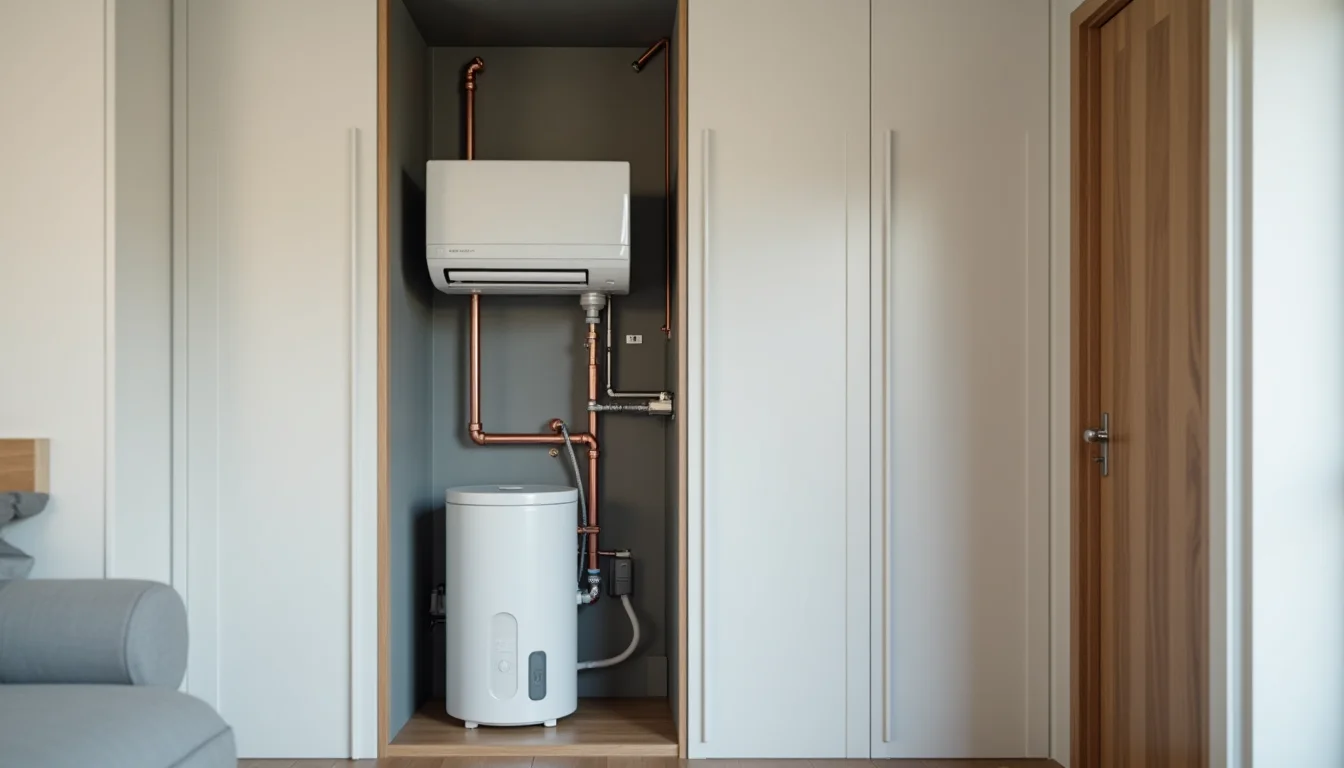
An exhaust air heat pump extracts warmth from the stale air your home already produces through ventilation, then uses that recovered energy to heat your hot water and, in some models, your central heating too. They're compact, quiet, and particularly well suited to smaller, well-insulated homes like modern flats and new-build properties. But they aren't the right choice for every UK home, and understanding the limitations is just as important as knowing the benefits.
How Does an Exhaust Air Heat Pump Actually Work?
Every home loses heat through ventilation. Whether it's the extractor fan in your bathroom, the kitchen hood, or just background air movement through trickle vents, warm air constantly escapes. An exhaust air heat pump captures that outgoing air before it leaves the building and runs it past a refrigerant coil to extract the residual heat.
That extracted heat is then compressed and boosted to a useful temperature, typically enough to heat a hot water cylinder to around 55°C. Some units can also contribute to space heating through underfloor heating or low-temperature radiators, though this depends on the model and your home's heat demand.
Think of it as a mechanical ventilation system with heat recovery (MVHR) combined with a small heat pump, all in one box. The unit handles ventilation and hot water production simultaneously. Most systems sit inside a utility cupboard or airing cupboard, so there's no outdoor unit bolted to your wall.
How Is an Exhaust Air Heat Pump Different from an Air Source Heat Pump?
The biggest difference is where the heat comes from. A standard air source heat pump (ASHP) draws heat from the outside air. An exhaust air heat pump draws heat from the warm, stale air inside your home.
This means exhaust air systems work with a much more stable and warmer air source, typically between 18°C and 22°C all year round, compared to outdoor temperatures that can drop below freezing. The trade-off? The volume of air available is much smaller, which limits the total heating output.
Here's a practical comparison:
| Feature | Exhaust Air Heat Pump | Air Source Heat Pump |
|---|---|---|
| Heat source | Indoor stale air (18-22°C) | Outdoor air (-5°C to 30°C) |
| Typical output | 1-3 kW | 5-16 kW |
| Outdoor unit needed | No | Yes |
| Noise | Very quiet | Some outdoor noise |
| Best suited for | Small, well-insulated homes | Most property types |
| Hot water | Yes | Yes |
| Full central heating | Limited | Yes |
| Typical installed cost | £5,000-£9,000 | £10,000-£16,000 |
An ASHP is the workhorse choice for most UK homes. An exhaust air heat pump is a specialist option that makes sense in specific situations.
Which Homes Are Actually Suited to an Exhaust Air Heat Pump?
This is where you need to be honest about your property. Exhaust air heat pumps work best in homes with three specific characteristics.
Low heat demand. Your home needs to be well insulated with an annual heat demand below roughly 30 kWh per square metre. Most homes built to Building Regulations from around 2015 onwards will meet this. Older properties with solid walls and poor loft insulation almost certainly won't.
Small to medium floor area. We're typically talking about flats, small terraced houses, or compact new builds up to around 120 square metres. A draughty four-bed Victorian semi? Forget it.
Mechanical ventilation already installed or planned. The system needs ducted ventilation to collect the exhaust air. If your home already has MVHR or you're building an extension where you can integrate ducting, you're in a good position. Retrofitting ductwork into an existing home can be disruptive and expensive.
Let's say you own a two-bedroom flat in Bristol, built in 2020, with MVHR already fitted. Your annual heating bill sits around £500. An exhaust air heat pump could handle your hot water entirely and contribute meaningfully to your space heating. That's a genuine use case.
But if you live in a 1960s three-bed semi in Leeds with cavity wall insulation and gas central heating, a standard ASHP is almost certainly the better option.
Can You Get the £7,500 BUS Grant for an Exhaust Air Heat Pump?
The Boiler Upgrade Scheme (BUS) provides a £7,500 grant towards heat pump installations in England and Wales. The scheme is currently funded through to March 2028, so there's still time, but it's worth understanding the eligibility rules.
For an exhaust air heat pump to qualify, the installation must be carried out by an MCS certified installer, and the product itself must be MCS certified. The system must be replacing a fossil fuel heating system, so if you're already on gas or oil, you're eligible in principle.
Here's the catch: fewer exhaust air heat pump models carry MCS certification compared to standard ASHPs. The product range is smaller, and not every installer will have experience fitting them. You'll want to check with your chosen installer whether the specific model they propose qualifies for the grant before you commit.
With installed costs often sitting between £5,000 and £9,000, a £7,500 grant could cover most or even all of the cost. That's a genuinely attractive proposition if your home is suitable. Just be aware that the grant applies per property, and you can't combine it with other government energy grants for the same installation.
"Won't It Struggle to Heat My Home in Winter?"
This is the most common concern, and it's a fair one. The honest answer is: it depends entirely on your home's heat demand.
An exhaust air heat pump typically produces between 1 kW and 3 kW of heating output. For context, a typical UK gas boiler puts out 24-35 kW. So no, an exhaust air heat pump cannot replace a gas boiler in a poorly insulated house. It's not designed to.
What it can do is meet the full hot water and space heating needs of a very well-insulated, airtight home. Passivhaus-standard buildings are the ideal candidate. Some modern flats and new builds with EPC ratings of A or B can also work, provided the total heat loss is low enough.
If your home needs more than about 3 kW of heat on the coldest days of winter, you'll either need a supplementary heating source (like a small electric panel heater) or you should consider a conventional ASHP instead. A good installer will run heat loss calculations before recommending any system, and if they don't, that's a red flag.
What Are the Running Costs Like?
At current 2026 electricity prices of roughly 24.5p per kWh, the running costs of an exhaust air heat pump compare favourably to a direct electric immersion heater, but the savings against mains gas are more modest.
A typical exhaust air heat pump achieves a coefficient of performance (COP) of around 3 to 4. That means for every 1 kWh of electricity it uses, it produces 3-4 kWh of heat. So heating your water effectively costs you around 6-8p per kWh of heat delivered.
Compare that to gas at around 6.8p per kWh, and the direct cost saving is slim. The financial case is strongest if you're replacing electric immersion heating, oil, or LPG, where the cost per kWh is higher. And if you've got solar PV on your roof generating free electricity during the day, the economics improve significantly.
Running costs for hot water only typically fall between £100 and £200 per year. If the unit also contributes to space heating, your total energy costs will depend heavily on your home's insulation and how much supplementary heating you need.
Frequently Asked Questions
How much does an exhaust air heat pump cost to install in the UK?
Installed costs typically range from £5,000 to £9,000, depending on the model and complexity of the ducting work. If your home qualifies for the £7,500 BUS grant, the out-of-pocket cost could be very low or even nothing. Always get at least three quotes from MCS certified installers.
Do exhaust air heat pumps work in older houses?
Generally, no. Older homes with poor insulation and high heat demand need far more heating output than an exhaust air system can provide. You'd need a standard air source or ground source heat pump instead. If you've done a deep retrofit and your EPC is now B or above, it might be worth discussing with an installer.
Is an exhaust air heat pump the same as MVHR?
They're related but different. MVHR recovers heat from outgoing air and uses it to warm incoming fresh air. An exhaust air heat pump goes further by using a refrigerant cycle to boost that recovered heat and produce hot water or space heating. Some units combine both functions in a single box.
Can an exhaust air heat pump replace my gas boiler?
Only if your home has very low heat demand, typically a well-insulated flat or new build under 120 square metres. For most UK homes still relying on a gas boiler, a standard air source heat pump is the more practical replacement option.
Do you need planning permission for an exhaust air heat pump?
Because exhaust air heat pumps sit entirely inside your home with no external unit, they don't usually require planning permission. You'll still need to comply with Building Regulations, and your installer should handle the necessary notifications. If you live in a listed building or conservation area, check with your local planning authority first.
If you're considering an exhaust air heat pump, or you're not sure which type of heat pump suits your property best, the smartest first step is talking to a qualified installer. Use our directory at heatpumpinstallerdirectory.co.uk to find MCS certified heat pump installers in your area who can assess your home properly and tell you exactly what will and won't work.
Ready to talk to an installer?
Every firm in the directory is MCS-certified, with reviews and grant registration shown on its listing.
Related guides
- Do Heat Pumps Work in Cold Weather in the UK?
Worried your heat pump won't cope with a UK winter? Here's how modern systems perform at sub-zero temperatures, plus practical tips to keep efficiency high.
- Do Heat Pumps Work in Old Houses? The Complete Guide
Can you install a heat pump in a pre-1930s house? Yes. This guide covers solid walls, listed buildings, insulation fixes and real costs for older UK homes.
- Air Source vs Ground Source Heat Pump: How to Choose the Right System for Your Home
Air source or ground source heat pump? This practical guide helps UK homeowners choose the right system based on budget, garden size, and BUS grant eligibility.