
Do Heat Pumps Work With Underfloor Heating? A How-To Guide
Heat pumps and underfloor heating are the perfect match. Learn about flow temperatures, retrofit options, zoning, costs, and how the £7,500 BUS grant helps.

Written by Heat Pump Buddy
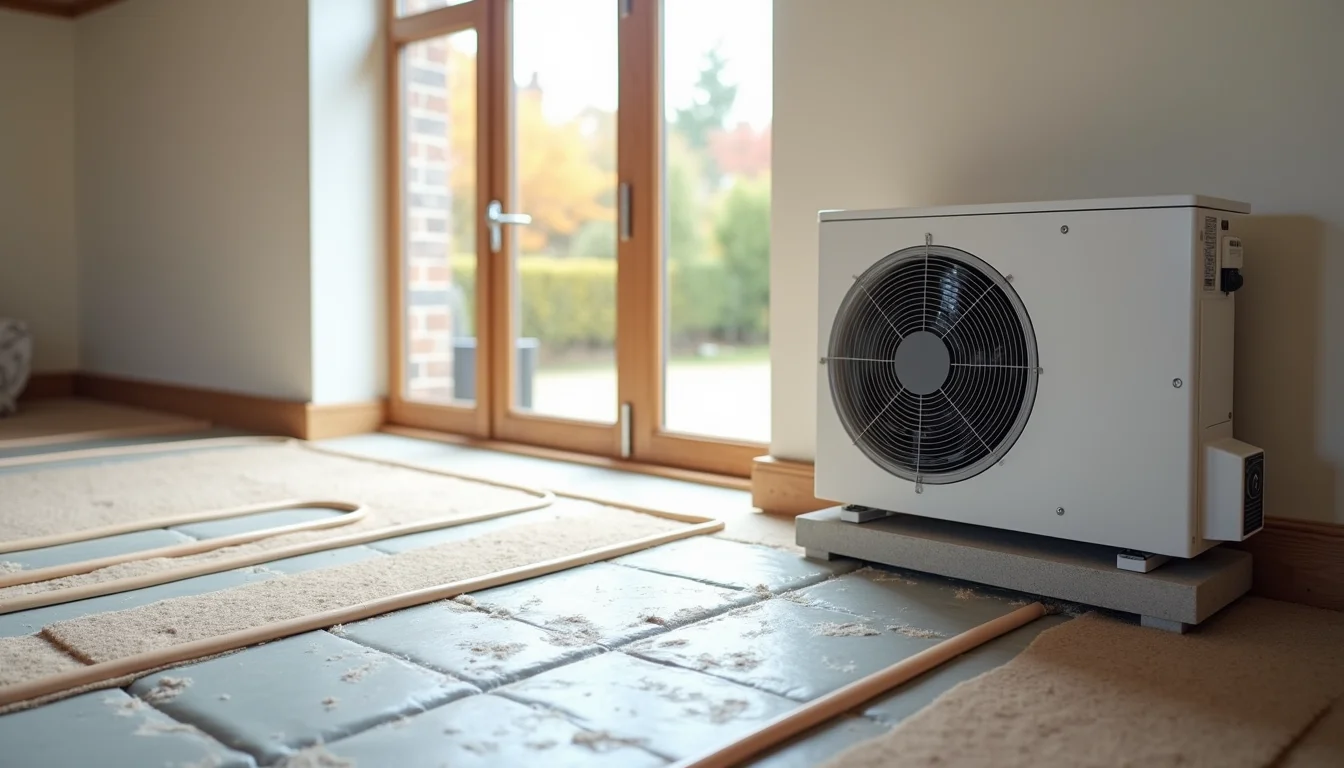
Yes, heat pumps and underfloor heating are one of the best pairings in home heating. Underfloor heating runs at low flow temperatures, typically 35-45°C, which is exactly the range where heat pumps operate most efficiently. If you're planning a heat pump installation in 2026, adding underfloor heating will squeeze the most performance and lowest running costs from your system.
Why Are Heat Pumps and Underfloor Heating Such a Good Match?
The reason is simple physics. A gas boiler fires water up to 60-80°C and pushes it through relatively small radiators. A heat pump works best when it doesn't have to push water temperatures that high. Every degree you lower the flow temperature, the heat pump's coefficient of performance (COP) improves, meaning you get more heat for each unit of electricity.
Underfloor heating spreads warmth across a huge surface area. Because that surface area is so large, it doesn't need scorching hot water to heat a room. Flow temperatures of 35-40°C are typical, and that's the sweet spot for an air source heat pump.
According to the Energy Saving Trust, a well-installed air source heat pump can deliver a COP of 3 or above, meaning you get 3kW of heat for every 1kW of electricity. Pair it with underfloor heating running at 35°C instead of radiators demanding 50°C, and that COP can climb towards 4. That difference shows up directly on your electricity bill.
What Flow Temperature Should You Set for Underfloor Heating With a Heat Pump?
This is one of the most important details to get right. Set the flow temperature too high and you'll waste energy. Set it too low and you'll be waiting hours for rooms to warm up.
For a screeded underfloor heating system (pipes buried in concrete), aim for a flow temperature of 35-45°C. Most installers will design the system around 40°C as a sensible starting point. For dry-fit or overlay systems where pipes sit in grooved boards above the subfloor, you can sometimes get away with 30-35°C because the heat transfer is more direct.
Your installer should carry out a proper heat loss calculation for every room. This determines the pipe spacing (typically 100-200mm centres) and the flow temperature needed. Rooms with large windows or poor insulation may need tighter pipe spacing rather than a higher flow temperature. That's important because bumping the flow temperature from 40°C to 50°C can cut the heat pump's efficiency by 15-20%.
If you've already got underfloor heating connected to a gas boiler, check what flow temperature it's currently running at. Many systems installed by plumbers used to gas boilers are set at 50-55°C, which is needlessly high. Turning this down before fitting a heat pump is a free efficiency gain.
Can You Retrofit Underfloor Heating in an Existing House?
This is the question most homeowners really want answered. And the honest answer is: yes, but it depends on your floors.
If you're already planning to replace flooring in part of your house, that's the ideal time. Overlay or dry-fit underfloor heating systems sit on top of your existing subfloor and add roughly 15-25mm of height. Companies like Nu-Heat and Polypipe sell kits specifically designed for retrofit, with grooved insulation boards that hold the pipes in place. You don't need to dig out your floor.
Solid ground floors are trickier. If you're prepared to excavate and lay a new screed, you can install a traditional wet underfloor heating system. But that's a bigger job, typically £80-120 per square metre including materials and labour.
Timber suspended floors are actually quite well suited to retrofit. Pipes can be clipped between joists from below if you have access from a cellar or crawl space. Or overlay panels can go on top.
Here's a practical point that gets overlooked: you don't have to do the whole house. Many homeowners fit underfloor heating on the ground floor and use correctly sized radiators upstairs. A heat pump can run a mixed system with different zones, which brings us to the next section.
How Does Zoning Work With Underfloor Heating and a Heat Pump?
Zoning means splitting your heating into separate areas that you can control independently. With underfloor heating, zoning is built into the design from the start.
Each room or area gets its own loop of pipe, controlled by an actuator on the manifold. A room thermostat in each zone tells the actuator to open or close, letting hot water flow only where it's needed. Most modern heat pump controllers can manage multiple zones without any fuss.
If you're running underfloor heating downstairs and radiators upstairs, your installer should set up two zones with different flow temperatures. The underfloor zone might run at 38°C while the radiator zone runs at 45-50°C (assuming you've got appropriately sized rads). Some heat pumps, particularly models from Daikin and Vaillant, have a built-in two-zone function that handles this automatically. For more on whether heat pumps work with existing radiators, we've covered that in a separate guide.
One thing to be aware of: underfloor heating responds slowly. It can take an hour or two for a screeded floor to warm up from cold. So rather than setting aggressive on/off schedules like you might with radiators, most people find it works better to maintain a gentle background temperature and only boost by a degree or two when needed. Smart thermostats from Heatmiser or the Vaillant sensoComfort handle this well.
How Much Does Underfloor Heating Cost Compared to Radiators?
Let's break this down with real numbers, because the cost gap isn't always as large as people assume.
For a new-build or major renovation where you're laying floors anyway, a wet underfloor heating system typically costs £40-60 per square metre for materials and installation. That's for a standard screeded system. A three-bedroom semi with 50m² of ground-floor underfloor heating would come in around £2,000-3,000 for the underfloor heating element alone.
Retrofit overlay systems cost more per square metre, usually £60-90, because of the additional insulation boards and the labour to fit them around existing door frames and thresholds.
By comparison, fitting new radiators suitable for heat pump temperatures throughout a three-bed house typically costs £2,000-4,000. You'd likely need to upsize several radiators or add extra ones, because heat pumps run at lower flow temperatures than gas boilers. Our guide on what size heat pump you need covers the sizing side in detail.
Take a 1990s three-bed semi in Kent. The homeowner gets quotes for a 9kW air source heat pump with underfloor heating on the ground floor and upsized radiators upstairs. Total quoted price for the heat pump, hot water cylinder, underfloor heating, new radiators, and all controls: £14,500. After the £7,500 BUS grant, the out-of-pocket cost is £7,000. That's roughly £1,500 more than a radiator-only setup, but with noticeably better comfort and lower running costs over the system's 20-year lifespan.
How Does the £7,500 BUS Grant Help With the Cost?
The Boiler Upgrade Scheme provides a £7,500 grant towards the cost of an air source or ground source heat pump in England and Wales. The grant is available through to 2028, according to gov.uk.
The grant covers the heat pump unit, installation labour, and associated works. That means if your installer includes underfloor heating pipework or manifold setup as part of the heat pump installation, the grant can contribute towards the overall project cost. The grant doesn't separately cover underfloor heating as a standalone item, but since it reduces the total bill, it effectively takes a large chunk out of the combined cost.
To qualify, your property needs a valid EPC and your installer must be MCS certified. Your installer applies for the voucher on your behalf before starting work, and the £7,500 is deducted from your final invoice. You never have to claim the money back yourself.
If you're in Scotland, different funding applies. Check the Home Energy Scotland grants page for the latest figures.
"Won't Underfloor Heating Take Ages to Warm Up?"
This is probably the single biggest worry homeowners raise, and it's worth addressing head on.
Yes, a screeded underfloor heating system is slower to respond than a radiator. A radiator can heat a room noticeably within 15-20 minutes. A screed floor might take 1-2 hours from a cold start. But here's the thing: you shouldn't be cold-starting it regularly.
The most efficient way to run underfloor heating with a heat pump is to keep a low background temperature ticking over. Instead of turning the heating off completely overnight and blasting it on in the morning, you let the floor temperature drop by just a couple of degrees overnight and bring it back up gently. Because heat pumps run cheaply at low output, this "always on, low and slow" approach typically costs less than dramatic on/off cycling.
Dry-fit overlay systems respond faster because there's less thermal mass. Some homeowners report noticeable warmth within 30-40 minutes. If speed of response matters to you, overlay boards are worth considering over traditional screed.
And there's an upside to that thermal mass. Once a screeded floor is warm, it stays warm for hours even after the heat pump stops running. On a cold February evening, that stored warmth keeps your rooms comfortable without the system running constantly. Have you ever walked across a heated stone floor in bare feet? It's hard to go back to radiators after that.
Frequently Asked Questions
Do heat pumps work well with underfloor heating?
Yes, underfloor heating is the ideal partner for a heat pump. It operates at low flow temperatures (35-45°C), which is exactly where heat pumps run most efficiently. This combination typically delivers higher COPs and lower electricity bills than using radiators alone.
What flow temperature for underfloor heating with a heat pump?
Most screeded underfloor heating systems with a heat pump run at 35-45°C, with 40°C being a common design target. Dry-fit overlay systems can sometimes run at 30-35°C. Your installer should calculate the exact temperature based on room-by-room heat loss figures.
Can you retrofit underfloor heating with a heat pump in an old house?
Yes, using overlay or dry-fit systems that sit on top of existing floors, adding around 15-25mm of height. These are designed specifically for retrofit and don't require digging out existing floors. Ground floors are the most common area to retrofit, with upsized radiators kept upstairs.
How much does underfloor heating with a heat pump cost UK?
A full heat pump installation with ground-floor underfloor heating and upstairs radiators typically costs £12,000-16,000 before the grant. After the £7,500 Boiler Upgrade Scheme grant, homeowners usually pay £5,000-8,500 out of pocket. Underfloor heating adds roughly £1,500-3,000 on top of a radiator-only setup.
Is underfloor heating better than radiators with a heat pump?
For efficiency, yes. Underfloor heating allows the heat pump to run at lower flow temperatures, which directly improves its COP and reduces running costs. Comfort is generally better too, with even warmth across the whole floor rather than hot spots near radiators. The main trade-off is slower response time, which is easily managed with consistent low-temperature scheduling.
If you're considering a heat pump with underfloor heating, the first step is getting quotes from MCS certified installers who have experience designing mixed or full-UFH systems. You can find trusted local installers through our find heat pump installers by county page, or browse installers in specific areas like Kent or Hampshire. Get at least three quotes and make sure each one includes a full heat loss calculation for your property.
Ready to talk to an installer?
Compare the listed firms, then check current MCS status, service coverage and any grant registration directly. Contact routes are shown when a firm has published one.
Related guides
- Can a Heat Pump Heat a Whole House in the UK?
Worried a heat pump won't heat your entire home? We cover sizing, radiators, insulation and hot water so you know exactly what it takes to ditch your boiler.
- How Does a Heat Pump Work in Winter? A Practical Guide
Step-by-step explanation of how heat pumps extract warmth in freezing UK winters, including defrost cycles, backup heating, and tips to keep efficiency high.
- Do Heat Pumps Work With Existing Radiators?
Can you keep your existing radiators with a heat pump? Learn which radiators work, which need upgrading, and how flow temperature affects your heating system.