
How Does a Heat Pump Work in Winter? A Practical Guide
Step-by-step explanation of how heat pumps extract warmth in freezing UK winters, including defrost cycles, backup heating, and tips to keep efficiency high.

Written by Heat Pump Buddy
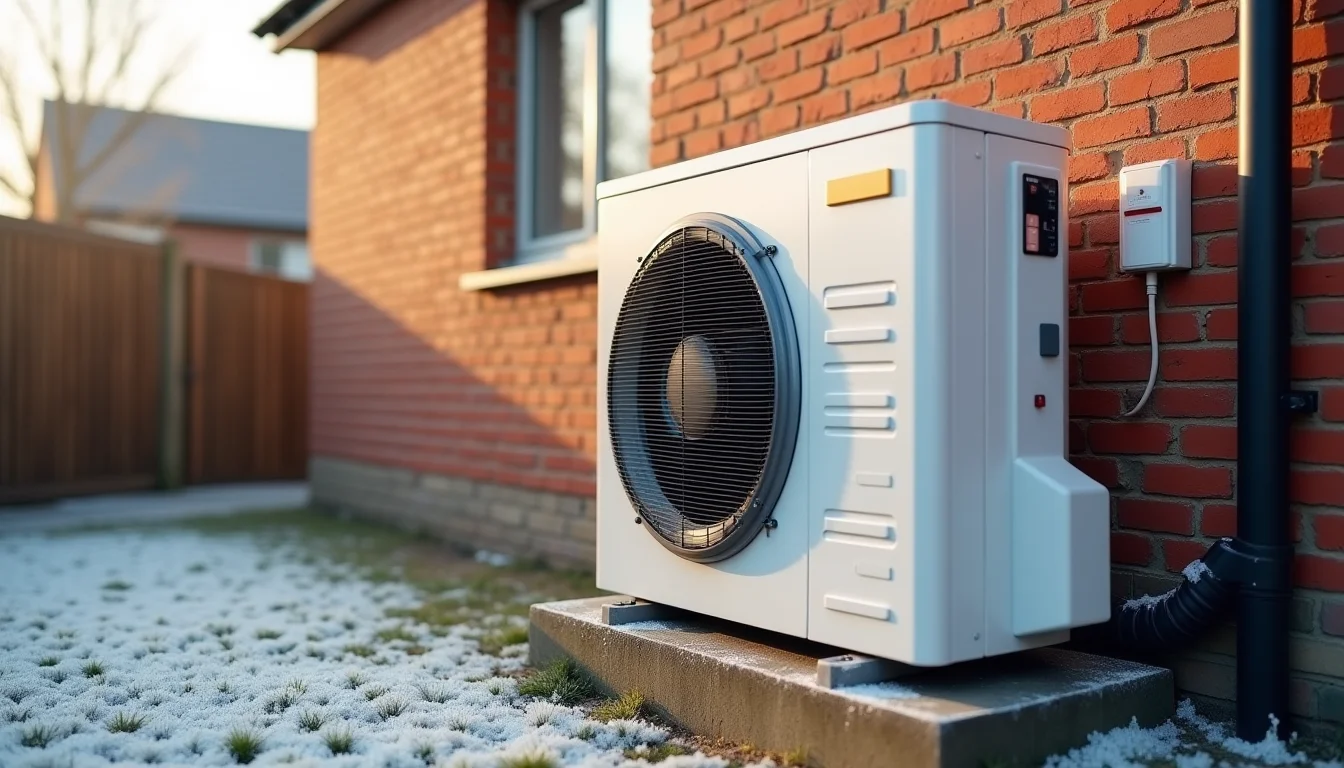
A heat pump works in winter by extracting heat energy from cold outside air using a refrigeration cycle, the same basic principle your fridge uses but in reverse. Even when temperatures drop to -10°C or below, there's still usable thermal energy in the air, and modern refrigerants are designed to absorb it efficiently. The system compresses this captured energy to raise the temperature high enough to heat your home and hot water.
What Actually Happens Inside a Heat Pump When It's Freezing Outside?
This is where most explanations get vague, so let's walk through the real process step by step.
A heat pump contains a closed loop of refrigerant, a fluid with an extremely low boiling point, typically around -25°C to -30°C in modern systems. That's the key detail. Because the refrigerant boils at such a low temperature, even 0°C outdoor air feels relatively "hot" to it.
Here's the cycle in four stages:
1. Evaporator (outdoor unit): A fan draws cold winter air across a heat exchanger containing the liquid refrigerant. Because the air is warmer than the refrigerant's boiling point, the refrigerant absorbs heat energy and turns into a gas. Think of it like water boiling on a hob, except this fluid boils at -25°C instead of 100°C.
2. Compressor: The gas is then squeezed by an electrically driven compressor. Compressing a gas raises its temperature significantly. This is the same reason a bicycle pump gets warm when you inflate a tyre. The refrigerant gas, which might have been at -5°C after the evaporator, is compressed until it reaches 50°C to 75°C.
3. Condenser (indoor heat exchanger): The hot, pressurised gas flows through a second heat exchanger inside your house, where it gives up its heat to your central heating water. As it loses energy, the refrigerant cools and condenses back into a liquid.
4. Expansion valve: The liquid refrigerant passes through an expansion valve, which rapidly drops the pressure and temperature back down, ready to start the cycle again.
This whole loop runs continuously while your home needs heating. The only electricity the system consumes is to run the compressor, the fans, and the control electronics. For every 1 kWh of electricity used, a well-installed air source heat pump typically delivers 2.5 to 3.5 kWh of heat, even in winter. That ratio is called the Coefficient of Performance, or COP.
How Does the Defrost Cycle Work?
When outdoor temperatures hover between about -7°C and 5°C, and humidity is moderate to high, frost and ice can build up on the outdoor evaporator coils. This is completely normal and expected. Your heat pump is designed to handle it.
The defrost cycle kicks in automatically. The system temporarily reverses the refrigeration cycle, sending warm refrigerant backwards through the outdoor coil to melt the frost. You might hear the fan stop and see steam rising from the outdoor unit. That's the defrost doing its job.
A typical defrost cycle lasts between 2 and 10 minutes and usually triggers every 30 to 90 minutes during frosty conditions. During defrost, the unit isn't providing heat to your home, which is why the system uses a small amount of stored heat from your buffer tank or cylinder to keep the radiators warm.
The Energy Saving Trust notes that modern heat pumps are tested and rated for UK winter conditions, and the defrost cycle's energy use is already factored into the published efficiency figures.
Some homeowners worry about ice build-up being a fault. It isn't, unless the ice never clears. If your outdoor unit stays iced up for hours on end, that does indicate a problem, possibly a faulty defrost sensor, low refrigerant charge, or restricted airflow. In that case, call your installer.
Does a Heat Pump Need Backup Heating in Winter?
Most properly sized heat pumps don't need backup heating at all in UK conditions.
The UK's winter temperatures rarely drop below -5°C for sustained periods. Even in West Yorkshire or the Scottish Highlands, the coldest nights typically bottom out around -8°C to -12°C. Modern air source heat pumps from manufacturers like Daikin, Vaillant, and Mitsubishi are rated to operate down to -20°C or even -25°C. At those extremes the COP drops, perhaps to 1.5 or 2.0, but the system still produces heat.
Some installations do include a small immersion heater element in the hot water cylinder as a backup. This is standard practice and only draws electricity if the heat pump can't meet hot water demand during an unusually cold snap, or if the system is in defrost mode at the same time you need a burst of hot water.
You should be suspicious of any installer who suggests you'll need to keep your old gas boiler as backup. A correctly sized system shouldn't require it. Our guide on what size heat pump you need covers how proper sizing prevents this problem.
Practical Tips to Get the Best Winter Performance From Your Heat Pump
These aren't theoretical suggestions. They're the things that make a genuine difference to your heating bills between November and March.
Keep the outdoor unit clear. Don't let leaves, snow, or garden furniture block the airflow. The unit needs at least 300mm of clear space around it, and ideally more behind and above. Restricted airflow forces more frequent defrost cycles and reduces efficiency.
Don't keep turning the thermostat up and down. Heat pumps work best at a steady, lower flow temperature. Set your room thermostat to a comfortable temperature, say 20°C or 21°C, and leave it. A well-insulated house with a properly set weather compensation curve will stay comfortable all day.
Make sure weather compensation is switched on. This feature adjusts the flow temperature to your radiators based on the outdoor temperature. When it's mild outside, the system runs at a lower, more efficient flow temperature. When it's bitter, it raises the flow temperature. If your installer hasn't set this up, ask them to. It can make a noticeable difference to your seasonal COP.
Check your radiators are big enough. Heat pumps run most efficiently at flow temperatures between 35°C and 45°C, rather than the 60°C to 75°C a gas boiler uses. If your existing radiators are too small for these lower temperatures, you'll end up with the heat pump working harder and your bills going up. You can read more in our guide on whether heat pumps work with existing radiators.
Don't cover the outdoor unit or build a solid enclosure around it. People sometimes want to hide the unit behind fencing or a cover. Slatted screens with generous gaps are fine. A solid box is not. You'll strangle the airflow and cause problems.
What Does a Winter Heat Pump Setup Actually Cost?
Consider a 1930s three-bedroom semi in Leeds with cavity wall insulation and double glazing. After a proper heat loss survey, the installer recommends an 8.5 kW air source heat pump with a 210-litre hot water cylinder, two upgraded radiators in the living room and main bedroom, and full weather compensation controls.
The total quoted cost comes to £12,800. After the £7,500 Boiler Upgrade Scheme grant, the homeowner pays £5,300 out of pocket. Annual electricity cost to run the heat pump, based on an average COP of 3.0 across the year and the current Ofgem electricity price cap rate of around 24.5p per kWh, works out at roughly £900 to £1,050 per year for both heating and hot water. That compares well against a gas bill of £1,000 to £1,200 in the same property, and the gap will widen as gas prices are expected to rise faster than electricity in the coming years.
How the £7,500 BUS Grant Helps With Winter-Ready Heat Pump Installations
The Boiler Upgrade Scheme provides a £7,500 upfront grant toward the cost of an air source or ground source heat pump in England and Wales. The grant is available through to March 2028, according to the government's scheme page.
To qualify, you need an existing property (not a new build), a valid EPC, and your installation must be carried out by an MCS certified installer. The installer applies for the grant on your behalf, and it's deducted from your invoice, so you never need to fund the full amount upfront.
If you're in Scotland, a separate scheme through Home Energy Scotland offers interest-free loans and cashback grants. Our guide on heat pump grants in Scotland covers the details.
"But Will It Actually Keep My House Warm Enough in January?"
This is the question that stops most people. And it's a fair one.
The honest answer: yes, if the system is correctly sized and installed. Heat pumps are the primary heating technology in Norway, Sweden, and Finland, where winters are dramatically colder than anything the UK experiences. According to Nesta's research, UK heat pump owners report satisfaction levels of around 73% to 80%, with the most common complaints linked to poor installation or undersizing, not to the technology itself.
The problems people hear about almost always come down to one of three things: the heat pump is too small for the house, the flow temperature is set too high (wasting electricity), or the installer didn't set up weather compensation properly. These are installation quality issues, not technology failures.
Do your homework on the installer. Get at least three quotes, check they're MCS certified, and ask specifically about their experience with older or hard-to-heat properties. Our guide on red flags when hiring a heat pump installer is worth reading before you commit.
Frequently Asked Questions
Do heat pumps work when it's below freezing?
Yes. Modern air source heat pumps are rated to operate at outdoor temperatures as low as -20°C to -25°C. The COP drops in extreme cold, meaning they use more electricity per unit of heat produced, but they still deliver usable heating. In typical UK winters, you won't notice a performance problem.
How often does a heat pump defrost in winter?
In frosty or humid conditions, a heat pump might defrost every 30 to 90 minutes, with each cycle lasting 2 to 10 minutes. The frequency depends on outdoor temperature, humidity, and the specific unit. This is fully automatic and you don't need to do anything.
Does a heat pump use more electricity in winter?
Yes, because it's working harder to extract heat from colder air and running for more hours per day. Your winter electricity bills will be higher than summer, just as your gas bills would be with a boiler. A typical UK home with a heat pump might use 4,000 to 5,500 kWh of electricity per year for heating and hot water.
Should I turn my heat pump off at night in winter?
No. Heat pumps are designed to run at a low, steady output rather than cycling on and off. Turning the system off at night forces it to work hard to reheat the house in the morning, which uses more electricity than keeping a consistent temperature. Use the built-in scheduling to drop the temperature by 1°C or 2°C overnight if you prefer.
Can a heat pump heat radiators in winter without a boiler?
Absolutely. A correctly sized heat pump can be your sole heating source, running radiators and hot water all winter. The key is that radiators may need to be slightly larger than those used with a gas boiler, because the heat pump runs at a lower flow temperature. Your installer should assess this during the initial survey.
If you're ready to find out what a heat pump would cost for your home, search for MCS certified installers near you and get quotes from local companies who know how to size and install systems for proper winter performance.
Ready to talk to an installer?
Compare the listed firms, then check current MCS status, service coverage and any grant registration directly. Contact routes are shown when a firm has published one.
Related guides
- Do Heat Pumps Work With Existing Radiators?
Can you keep your existing radiators with a heat pump? Learn which radiators work, which need upgrading, and how flow temperature affects your heating system.
- Do Heat Pumps Work in Cold Weather in the UK?
Worried your heat pump won't cope with a UK winter? Here's how modern systems perform at sub-zero temperatures, plus practical tips to keep efficiency high.
- Do Heat Pumps Work in Old Houses? The Complete Guide
Can you install a heat pump in a pre-1930s house? Yes. This guide covers solid walls, listed buildings, insulation fixes and real costs for older UK homes.