
Can a Heat Pump Heat a Whole House in the UK?
Worried a heat pump won't heat your entire home? We cover sizing, radiators, insulation and hot water so you know exactly what it takes to ditch your boiler.

Written by Heat Pump Buddy
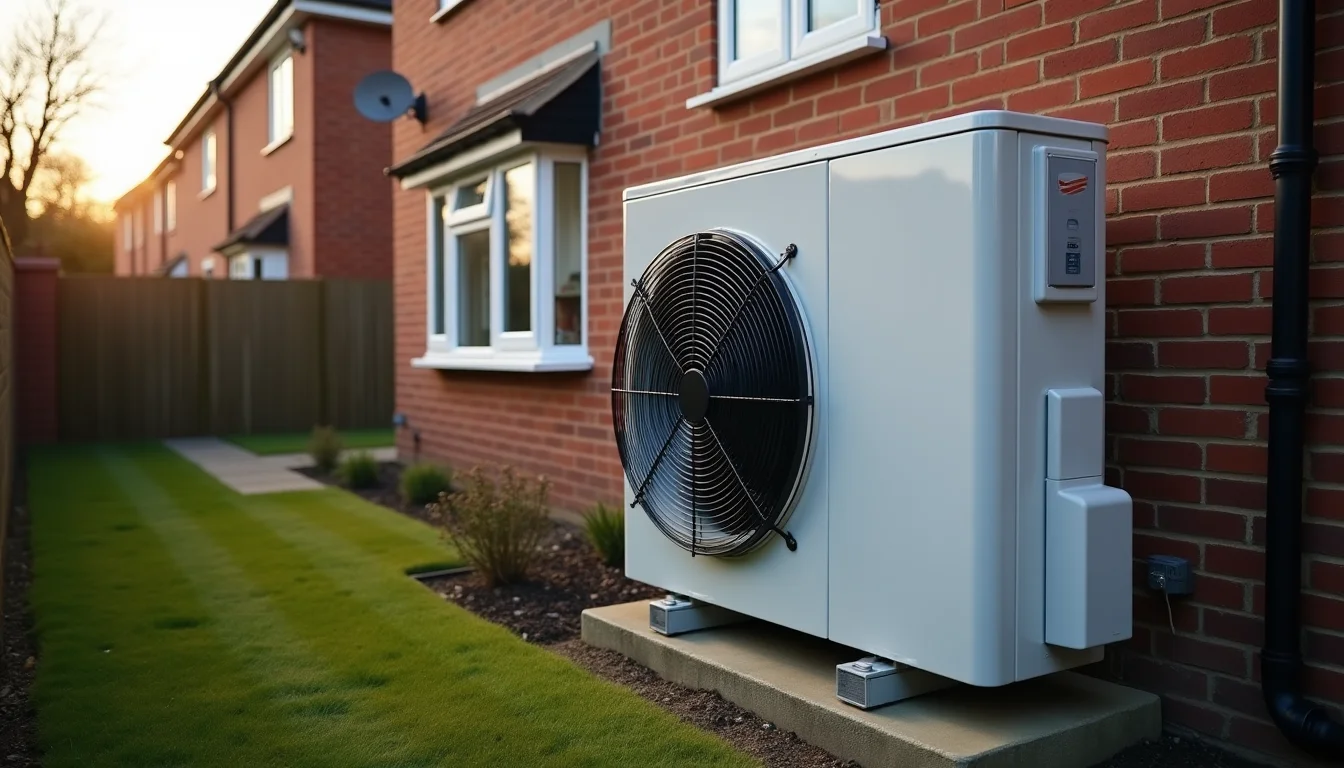
Yes, a properly sized heat pump can heat an entire UK house, including hot water. The idea that they only manage background warmth or struggle in cold months is outdated and usually traces back to badly designed systems. Get the sizing, insulation and emitter setup right, and a heat pump replaces a gas boiler completely.
Why Do People Think Heat Pumps Can't Heat a Whole House?
This worry comes from two places. The first is early installations where the heat pump was undersized or dropped into a house with no other changes. The second is a basic misunderstanding about how heat pumps deliver warmth compared to a boiler.
A gas boiler fires up, blasts out water at 70°C or higher, and heats a room fast. A heat pump works differently. It typically runs at lower flow temperatures, around 35°C to 50°C, and delivers heat more steadily over longer periods. That doesn't mean less heat. It means the heat arrives in a different pattern.
If you've ever sat in a well-heated Scandinavian home in minus 20°C, you've experienced what a heat pump can do. The UK's climate is considerably milder, so the technical challenge here is smaller than many people assume.
How Does System Sizing Affect Whole-House Heating?
Sizing is the single biggest factor. An undersized heat pump will leave you cold. An oversized one wastes money and cycles on and off inefficiently.
Every MCS certified installer must carry out a room-by-room heat loss calculation before quoting. This follows the MCS MIS 3005 standard, and it accounts for your wall construction, glazing, floor area, ceiling height, ventilation rate and local design temperature. For most of England, the design temperature used is around minus 3°C to minus 4°C. In Scotland it can be minus 5°C or lower, depending on location.
A typical three-bed semi with reasonable insulation might have a total heat loss of 6 to 8 kW. That means a 7 or 8 kW air source heat pump will cover it. A larger detached house with solid walls and high ceilings could need 12 to 16 kW. The point is that the calculation drives the choice, not a rough guess. If an installer quotes you without doing a proper heat loss survey, treat that as a red flag. For more detail on getting this right, our sizing and cost guide walks through the full process.
Do You Need to Upgrade Your Radiators?
Not always, but sometimes.
Because heat pumps run most efficiently at lower flow temperatures than a gas boiler, your radiators need to emit enough warmth at those lower temperatures. A radiator rated at 1,200 watts with 70°C flow water might only put out around 600 watts at 45°C. If that room needs 1,000 watts, you've got a gap.
The fix is usually straightforward. You might need to swap a few radiators for larger ones, or add an extra radiator in one or two rooms. In many homes, especially those built after 2000 with decent insulation, the existing radiators are already oversized for the actual heat loss, so they cope fine at lower temperatures.
Underfloor heating is ideal for heat pumps because it has a huge surface area and works brilliantly at 35°C flow temperatures. But you don't need underfloor heating to make a heat pump work. Plenty of UK homes run heat pumps with standard radiators and stay perfectly warm. Our guide on whether heat pumps work with existing radiators covers this in more detail.
How Important Is Insulation?
Insulation doesn't just help heat pumps. It helps any heating system. But it matters more with a heat pump because reducing your heat loss means you can install a smaller, cheaper unit and run it at lower flow temperatures where it's most efficient.
The Energy Saving Trust recommends that loft insulation of at least 270mm and filled cavity walls are sensible steps before or alongside a heat pump installation. These are relatively cheap improvements that cut your ongoing bills and improve comfort.
Does your house need to be a passive house before a heat pump will work? Absolutely not. Heat pumps work in solid-wall Victorian terraces, 1930s semis, and draughty cottages across the UK. The insulation level affects the size of the heat pump you need, the running cost, and potentially whether some radiators need upgrading. But a good installer will design around your home as it is and recommend insulation improvements where they give the best return.
If you're in an older property, our guide on heat pumps in old houses goes into the specifics.
Can a Heat Pump Provide All Your Hot Water Too?
Yes. An air source heat pump connected to a hot water cylinder can provide all the domestic hot water a typical household needs.
Most systems use a 200 to 300 litre cylinder, which stores enough hot water for showers, baths and taps throughout the day. The heat pump heats the cylinder to around 45°C to 50°C during normal operation, with a periodic legionella cycle that raises the temperature to 60°C once a week. Some systems use a small immersion heater element for that legionella boost, others manage it with the heat pump alone.
If you currently have a combi boiler with no cylinder, you'll need space for one. A 200-litre unvented cylinder is roughly the size of a large fridge. It can go in an airing cupboard, utility room, or even a garage. This is one of the practical changes people don't always expect, but it's a standard part of the switchover.
What About the Coldest Days of Winter?
This is where a lot of the doubt creeps in. Can a heat pump cope when it's minus 3°C outside and you need your house at 21°C?
Modern air source heat pumps are tested and rated to operate down to minus 15°C or even minus 25°C, depending on the model. Manufacturers like Daikin, Mitsubishi, Vaillant, and Samsung all publish performance data at low ambient temperatures. At minus 7°C, a well-specified heat pump still delivers its rated output, though its efficiency (the coefficient of performance, or COP) drops somewhat.
According to Ofgem's data, the UK rarely sees extended periods below minus 5°C in most regions. The MCS design process specifically sizes the system for your local extreme temperature, so a properly designed installation accounts for the worst-case scenario.
For a deeper look at cold-weather performance, have a read of our guide to heat pumps in winter.
The £7,500 Boiler Upgrade Scheme Grant
The Boiler Upgrade Scheme (BUS) provides a £7,500 grant towards the cost of an air source heat pump installation in England and Wales. It's available in 2026 and is currently funded through to March 2028, according to gov.uk.
To qualify, your property needs to have a valid EPC (no older than 10 years), and the installation must be carried out by an MCS certified installer. The grant is applied directly to your invoice, so you don't pay the full price and wait for a refund.
Take a 1960s three-bed semi in Kent with cavity wall insulation and 250mm loft insulation. The heat loss calculation shows 7.5 kW needed, so the installer specifies an 8 kW air source heat pump with a 210-litre hot water cylinder. Total quoted cost: £12,500. After the £7,500 BUS grant, the homeowner pays £5,000. Three radiators in the lounge and two bedrooms need upsizing at roughly £300 each, bringing the total out-of-pocket spend to around £5,900. That household then runs their entire heating and hot water from the heat pump, with no gas bill at all.
If you're in Scotland, a separate scheme through Home Energy Scotland offers up to £7,500 plus an optional interest-free loan. Our Scotland grants guide has the latest figures.
"But Will My House Actually Be Warm Enough?"
This is the objection that stops more people than any other. And it's a fair question.
The honest answer is that a well-designed system will keep your house at whatever temperature you set on the thermostat. 21°C in the living room, 18°C in bedrooms, whatever you prefer. It won't feel different from a gas boiler in terms of achieved room temperature.
What does feel different is how the heat arrives. With a boiler, you might be used to turning the heating on an hour before you need it, getting a blast of warmth, then turning it off. A heat pump works better running for longer periods at a lower intensity. Many people set theirs to run on a weather compensation curve, where the system automatically adjusts output based on the outside temperature. You might leave it running most of the day in winter, and the house just stays consistently warm.
That steady warmth is something most heat pump owners say they prefer once they're used to it. No cold spots when you wake up. No overheated rooms that then cool rapidly.
Have you spoken to anyone who already has one installed? That's often the most reassuring thing you can do.
Frequently Asked Questions
Can a heat pump heat a whole house UK?
Yes. A correctly sized air source or ground source heat pump can provide 100% of the space heating and hot water for a UK home. The key requirements are proper heat loss calculations, correctly sized emitters (radiators or underfloor heating), and a suitable hot water cylinder.
Do you still need a boiler with a heat pump?
No, you don't need to keep a boiler as backup. A properly designed heat pump system is sized to meet your full heating demand, including on the coldest days of the year. Some homeowners choose to keep an existing boiler temporarily for reassurance, but it shouldn't be necessary.
How many radiators do you need to change for a heat pump?
It depends on your home. In a well-insulated property, you might not need to change any. In older homes or rooms with undersized radiators, you may need to swap or add radiators in a few rooms. Your installer's heat loss survey will identify exactly which ones need attention.
Do heat pumps work in poorly insulated houses?
They can, but you'll need a larger heat pump, higher flow temperatures, and possibly more radiator upgrades, all of which increase cost and reduce efficiency. Adding loft and cavity wall insulation before or alongside installation is usually the most cost-effective approach.
How much does it cost to heat a whole house with a heat pump?
Running costs vary by house size, insulation level, and electricity tariff. For a typical three-bed semi, annual heating and hot water costs with an air source heat pump are roughly £800 to £1,100 at 2026 electricity prices. A dedicated heat pump tariff, such as those listed on the Energy Saving Trust site, can bring costs down further.
If you're ready to find out whether a heat pump can fully heat your home, the best next step is getting a proper survey and quote from an MCS certified installer in your area. Find trusted heat pump installers near you and request up to three quotes to compare.
Ready to talk to an installer?
Compare the listed firms, then check current MCS status, service coverage and any grant registration directly. Contact routes are shown when a firm has published one.
Related guides
- Do Heat Pumps Work With Underfloor Heating? A How-To Guide
Heat pumps and underfloor heating are the perfect match. Learn about flow temperatures, retrofit options, zoning, costs, and how the £7,500 BUS grant helps.
- How Does a Heat Pump Work in Winter? A Practical Guide
Step-by-step explanation of how heat pumps extract warmth in freezing UK winters, including defrost cycles, backup heating, and tips to keep efficiency high.
- Do Heat Pumps Work With Existing Radiators?
Can you keep your existing radiators with a heat pump? Learn which radiators work, which need upgrading, and how flow temperature affects your heating system.