
Can I Get a Heat Pump in a Flat or Apartment?
Yes, you can get a heat pump in a flat. Find out which systems work, how to get freeholder consent, and whether you qualify for the £7,500 BUS grant as a leaseholder.

Written by Heat Pump Buddy
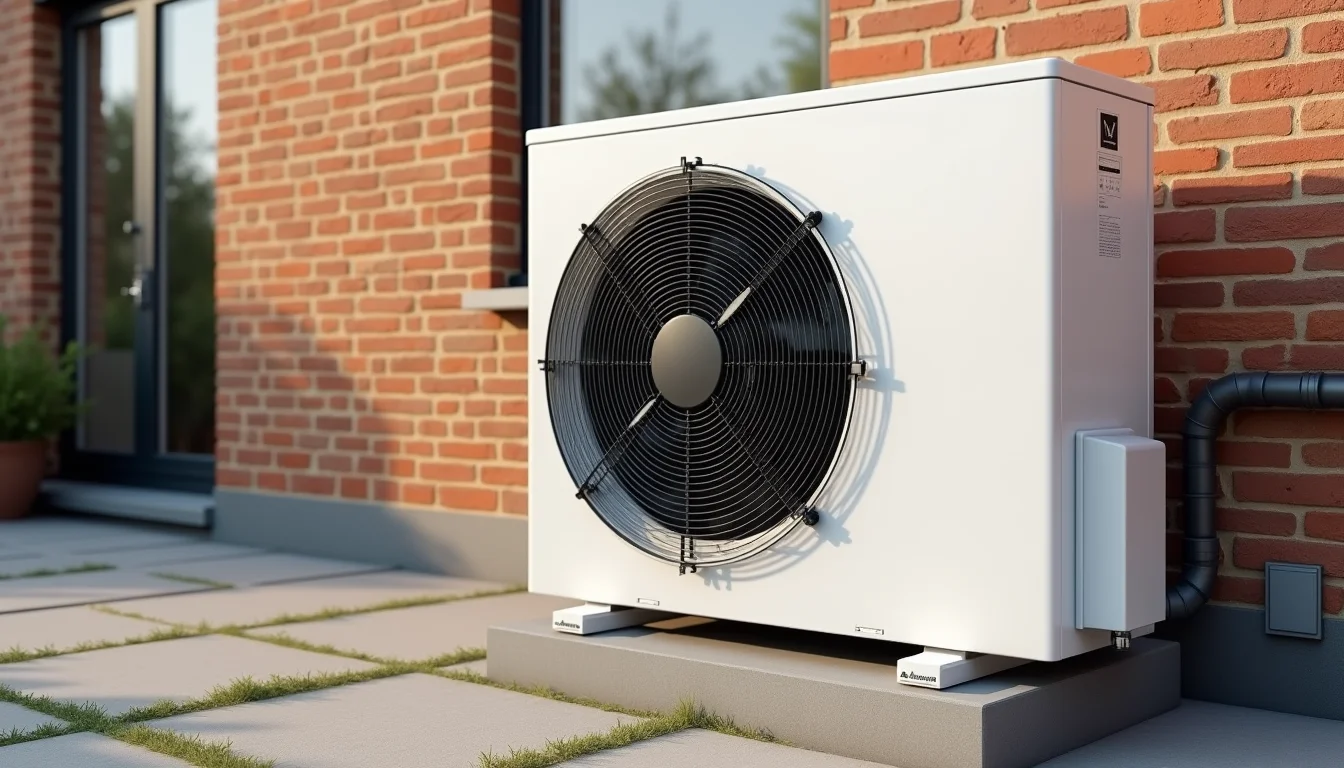
Yes, you can get a heat pump installed in a flat or apartment, but it's harder than in a house and there are extra hoops to jump through. You'll need to deal with freeholder consent, planning restrictions that don't apply to houses, and picking a system type that actually fits your space. This guide walks you through every step so you know exactly what you're facing.
What Types of Heat Pump Work in a Flat?
Not every heat pump suits a flat. The standard air source unit you see bolted to the side of a detached house needs outdoor space, pipework routes, and a certain distance from your neighbour's window. In a flat, your options are narrower, but they do exist.
Exhaust air heat pumps are the strongest contender for most flats. These units sit entirely inside your property and extract heat from stale ventilation air. Manufacturers like NIBE produce models specifically designed for apartments, with the unit fitting inside a tall cupboard roughly the size of a fridge-freezer. They work best in well-insulated flats because the heat output is typically lower than a standard air source system.
Air-to-air heat pumps are another option. These are essentially reversible air conditioning units that provide heating in winter and cooling in summer. You will still need a small external unit on a balcony or exterior wall, but they're much smaller and quieter than a full air-to-water system. The downside is they don't heat your hot water, so you'd still need an immersion heater or similar.
Shared ground source loops are worth knowing about if your block is considering a collective upgrade. A single borehole or ground loop array in communal grounds can serve multiple flats through individual heat pumps inside each unit. This is more common in new-build developments, but some retrofit schemes have done it too.
Standard air source heat pumps aren't ruled out entirely. If you're in a ground-floor flat with your own external wall space or a small patio area, it may be feasible. But you'll face stricter planning and noise rules than a homeowner in a detached property.
Do I Need Freeholder Permission to Install a Heat Pump?
Almost certainly, yes. If you're a leaseholder, your lease will likely require written consent from the freeholder before you make any external alterations to the building. Even internal changes that affect the building's structure or services might need approval.
Check your lease first. Look for clauses about alterations, fixtures, and anything fixed to the exterior. Most leases require you to apply formally to the freeholder or managing agent, and some charge an administration fee for considering the request.
The freeholder's main concerns will be:
- Noise affecting other residents in the building
- Visual impact on the exterior of the property
- Structural implications of mounting equipment on walls
- Insurance and liability if something goes wrong
Get your request in writing and include details of the specific unit you're proposing, its noise output in decibels, where it would be positioned, and confirmation that the installer is MCS certified. A professional survey report from an installer helps enormously here. Freeholders are far more likely to say yes when they can see that someone qualified has thought it through.
If you own your flat as a share of freehold, you'll still need the agreement of the other freeholders. And if you're in a block managed by a residents' management company, it'll need to go through the directors or a general meeting.
Planning Permission: Why Flats Don't Get Permitted Development Rights
This catches a lot of people out. Under current rules in England, permitted development rights for air source heat pumps apply only to detached, semi-detached, and terraced houses. Flats and maisonettes are excluded, according to the government's planning guidance on permitted development.
That means if your heat pump installation involves any external unit or any change to the building's exterior, you'll need to submit a full planning application to your local council. This adds time and cost. A typical householder planning application in England costs £258 and takes around eight weeks for a decision.
Some councils are more receptive than others. If you're in a conservation area or a listed building, the bar is even higher. But don't assume it's impossible. Councils are under increasing pressure to support low-carbon heating, and a well-prepared application with noise data, visual mock-ups, and an MCS installer's backing has a reasonable chance.
For exhaust air heat pumps that sit entirely inside the flat with no external unit, you may not need planning permission at all. But you should still check with your local planning authority, because building regulations approval will be needed regardless.
Noise Rules: Keeping the Peace With Your Neighbours
Noise is probably the single biggest practical barrier to fitting a heat pump on a flat. And it's a legitimate concern. Your neighbour's bedroom wall might be just metres from where an external unit would sit.
The MCS installation standard (MIS 3005) requires that a heat pump must not increase the background noise level at the nearest neighbour's window by more than a set amount. For permitted development (which doesn't apply to flats, but the noise limits are still used as a benchmark), the unit must not exceed 42 decibels at one metre from a neighbour's window.
In practice, modern units from manufacturers like Vaillant, Daikin, and Samsung run at around 48 to 55 dB at one metre from the unit itself. Sound drops with distance, so if you can place the unit several metres from the nearest window, you may meet the threshold. But in a flat with shared walls and balconies directly above or below, the margins can be very tight.
Acoustic enclosures and anti-vibration mounts can help reduce noise transmission. Your installer should carry out a noise assessment as part of their survey. If the numbers don't work, an exhaust air system inside the flat removes the external noise issue entirely.
Have you spoken to your neighbours about it? Getting them on board early can prevent objections later. A simple conversation explaining what you're planning, how quiet the unit is, and what the visual impact will be goes a long way.
Can Leaseholders Get the £7,500 BUS Grant for a Heat Pump?
Yes, leaseholders in England and Wales can apply for the Boiler Upgrade Scheme (BUS) grant, which provides £7,500 towards the cost of an air source or ground source heat pump. The grant is available until at least March 2028, and there's no income test or means-testing involved.
To qualify as a leaseholder, your flat must have its own existing heating system that uses fossil fuels, such as a gas boiler or electric storage heaters. The property needs a valid EPC (Energy Performance Certificate), and there's no minimum EPC rating required. The installation must be carried out by an MCS certified installer who applies for the voucher on your behalf through Ofgem.
One important detail: the grant is paid per property, not per building. So if you and your upstairs neighbour both want heat pumps, you can each apply for a separate £7,500 voucher. Ofgem's official scheme guidance confirms that eligible properties include individual flats, provided they meet the criteria.
There's a catch with shared heating systems though. If your block has a communal boiler, the BUS grant doesn't apply to individual flats because they don't each have their own heating system being replaced. In that case, the grant application would need to come from the freeholder or managing agent for the whole building, which is a much bigger project.
Consider a two-bedroom flat in a purpose-built block in London. The owner has an individual gas combi boiler, freeholder consent, and planning permission. An MCS installer quotes £11,000 for a compact air source heat pump with a hot water cylinder. After the £7,500 BUS grant, the owner pays £3,500 out of pocket. At current gas and electricity prices, the running costs are roughly comparable to the old boiler, but the flat now has zero direct carbon emissions from heating.
"My Flat Is Too Small for a Heat Pump" — Is That Actually True?
This is the objection that stops most flat owners from even enquiring. And for some flats, it's a valid point. But for many, it's based on outdated assumptions about how big heat pump systems need to be.
A standard air-to-water heat pump system does need space for a hot water cylinder, which is typically around 150 to 200 litres. If you've currently got a combi boiler and no cylinder cupboard, finding room for one is a real challenge in a small flat.
But exhaust air heat pumps like the NIBE F730 combine the heat pump and hot water cylinder in a single floor-standing unit about 600mm wide, 600mm deep, and 1,800mm tall. That's the footprint of a large wardrobe. It fits into a utility cupboard, an airing cupboard, or even a hallway recess.
Air-to-air systems are even more compact inside. The indoor unit mounts on a wall like a standard air conditioning head, taking up no floor space at all. You trade hot water capability for a smaller physical footprint.
The outdoor unit for a small flat doesn't need to be the same size as one for a four-bedroom house. A 4kW to 6kW unit is often enough for a well-insulated flat, and these models are physically small. Some are barely larger than a suitcase.
So yes, space is tight in most flats. But saying it's impossible without getting an installer to do a survey is premature.
Step-by-Step: How to Get a Heat Pump Installed in Your Flat
Here's the practical order of steps that will save you time and avoid dead ends.
1. Check your lease. Read the alterations clause. If in doubt, ask a solicitor or your managing agent what approvals are needed.
2. Get an installer survey. Find an MCS certified installer through a directory like this one and ask them to visit. They'll assess your flat's size, insulation, existing heating system, and potential locations for any external unit. Most good installers won't charge for an initial survey.
3. Apply to your freeholder. Use the installer's survey report and proposed system details to make a formal written request. Include noise data, the unit's dimensions, and where it would be positioned.
4. Apply for planning permission if needed. If there's an external unit involved, you'll almost certainly need this for a flat. Your installer or a planning consultant can help with the application.
5. Get your EPC. You'll need a valid EPC to apply for the BUS grant. If yours has expired, a new assessment costs around £60 to £120.
6. Accept a quote and let the installer apply for the BUS grant. The installer submits the voucher application through Ofgem. Once approved, the £7,500 is deducted from your bill. You never handle the grant money yourself.
7. Installation. For a compact system in a flat, installation typically takes one to two days. It's quicker than in a house because there's less pipework to run. Read our guide on what to expect on installation day so you're prepared.
Frequently Asked Questions
Can you get a heat pump in a leasehold flat?
Yes, leaseholders can install heat pumps, but you'll need written consent from your freeholder and likely planning permission for any external unit. The £7,500 BUS grant is available to leaseholders with individual heating systems. Start by checking your lease terms and getting a survey from an MCS installer.
Do I need planning permission for a heat pump on a flat?
In most cases, yes. Permitted development rights for air source heat pumps don't extend to flats in England. You'll need to submit a planning application to your local council for any external unit. An exhaust air heat pump that sits entirely inside your flat may not require planning permission, but building regulations still apply.
What is the best heat pump for a flat UK?
Exhaust air heat pumps are generally the best fit for UK flats because they sit entirely indoors and don't require an external unit. Models like the NIBE F730 combine the heat pump and hot water cylinder in one unit. For flats with balcony or ground-floor access, a compact air source heat pump can also work well.
Can I get the BUS grant for a flat?
Yes, as long as your flat has its own individual fossil fuel heating system being replaced and you use an MCS certified installer. The £7,500 grant applies per property. Flats with shared communal heating systems aren't eligible for individual grants, but the freeholder could potentially apply for the whole building.
How much does a heat pump cost for a flat?
A compact air source or exhaust air heat pump for a flat typically costs between £8,000 and £14,000 before the grant. After the £7,500 BUS grant, you're looking at roughly £500 to £6,500 depending on the system type and complexity. Getting multiple quotes from MCS certified installers is the best way to get an accurate price for your specific flat.
If you're a flat owner thinking about making the switch, the first step is a proper survey from someone who knows what they're doing. Use our directory to find MCS certified heat pump installers near you and get the conversation started.
Ready to talk to an installer?
Compare the listed firms, then check current MCS status, service coverage and any grant registration directly. Contact routes are shown when a firm has published one.
Related guides
- What EPC Rating Do You Need for a Heat Pump?
Find out the EPC rating you need for a heat pump and the £7,500 BUS grant in 2026. Learn what each band means and how to improve your rating before installing.
- Do Heat Pumps Work With Underfloor Heating? A How-To Guide
Heat pumps and underfloor heating are the perfect match. Learn about flow temperatures, retrofit options, zoning, costs, and how the £7,500 BUS grant helps.
- Can a Heat Pump Heat a Whole House in the UK?
Worried a heat pump won't heat your entire home? We cover sizing, radiators, insulation and hot water so you know exactly what it takes to ditch your boiler.