
What Size Heat Pump Do I Need? Sizing & Cost Guide
Find out what size heat pump your home needs in kW, how sizing is calculated from heat loss, and what each size costs installed in 2026 with the £7,500 grant.

Written by Heat Pump Buddy
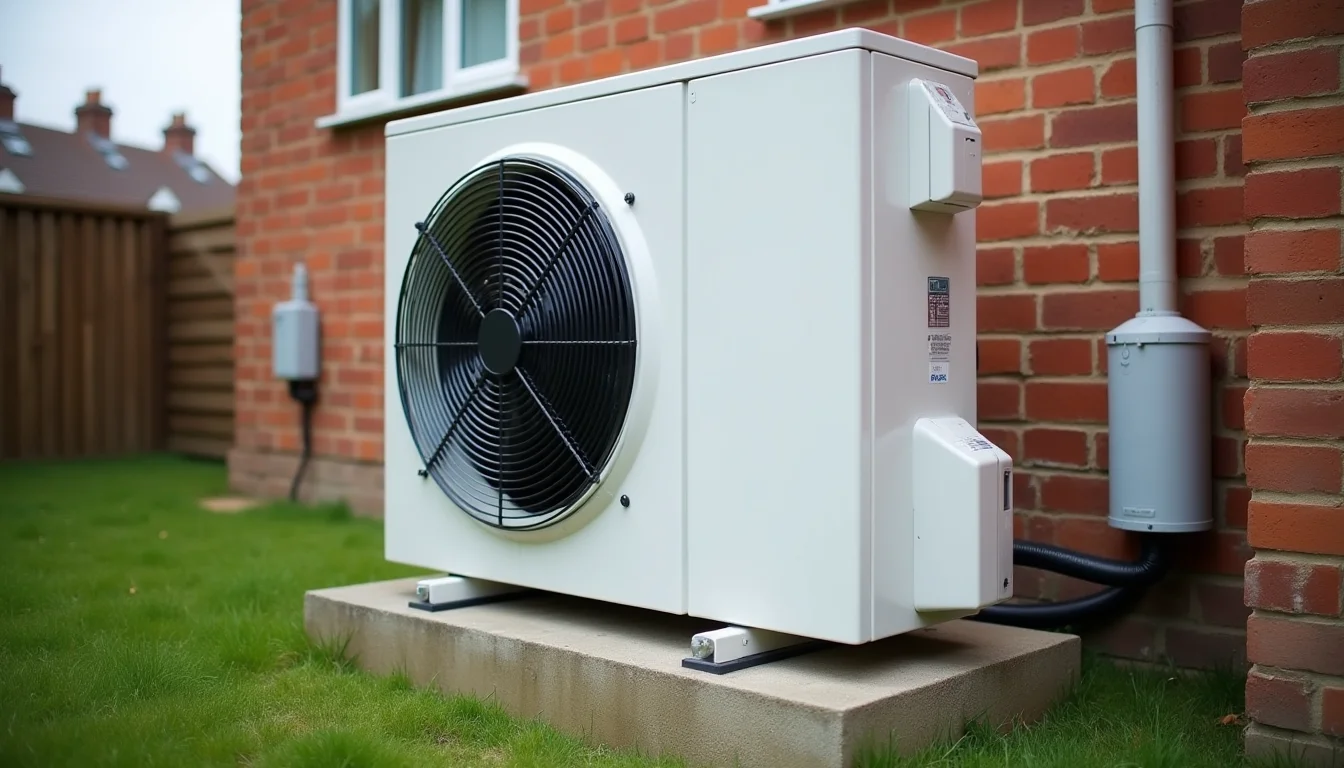
Most UK homes need an air source heat pump rated between 5 kW and 12 kW. The right size depends on your home's heat loss, which is calculated from its floor area, insulation levels, glazing, and how draughty it is. Getting the size wrong costs you money both upfront and on every energy bill for years to come, so it's worth understanding the basics before you get quotes.
How Is Heat Pump Size Calculated?
Heat pump sizing isn't about picking a number off a chart based on how many bedrooms you have. It's based on a room-by-room heat loss calculation, which measures exactly how much heat your home loses on the coldest days of the year.
An MCS-certified installer will carry out this calculation during your heat pump survey, looking at wall construction and insulation thickness, window type and area, roof insulation depth, floor type, ventilation rates, and your local design temperature (the coldest it typically gets in your area). The MCS standard MIS 3005 requires this calculation to be done properly before any installation can be signed off.
The output is a figure in kilowatts (kW) representing your home's peak heat demand. That figure tells the installer which heat pump to specify.
What Size Heat Pump Does a Typical UK Home Need?
Here's a rough guide to the kW rating most homes end up with. These are ballpark figures only, and your actual need could be higher or lower depending on insulation and building fabric.
| Property Type | Typical Heat Loss | Usual Heat Pump Size |
|---|---|---|
| Small flat or well-insulated bungalow | 3–5 kW | 5 kW |
| Mid-terrace, 2–3 bed | 5–7 kW | 6–8 kW |
| Semi-detached, 3 bed | 6–9 kW | 8–10 kW |
| Detached, 3–4 bed | 8–12 kW | 10–12 kW |
| Large detached or poorly insulated home | 12–16 kW | 14–16 kW |
A 1930s semi with cavity wall insulation and double glazing might come in at 7 or 8 kW. The same size house without cavity fill and with single-glazed windows could need 11 or 12 kW. Insulation makes that much difference.
That's why two houses on the same street can need completely different sized heat pumps.
What Happens If You Get the Size Wrong?
This is where people lose money. Both undersizing and oversizing are problems, but they hurt you in different ways.
Undersized heat pumps
A heat pump that's too small will struggle to keep your house warm on cold days. It'll run flat out, rely on the backup immersion heater to make up the difference, and your electricity bills will be higher than they should be. On the coldest weeks, you might notice rooms not reaching a comfortable temperature. The system will also wear out faster because it's permanently working at full capacity.
Oversized heat pumps
An oversized heat pump costs more to buy and install, which is money you didn't need to spend. But the running cost penalty is real too. A heat pump that's too big for your home will cycle on and off frequently rather than running steadily at a lower output. This constant stopping and starting reduces efficiency, increases component wear, and can make the system noisier.
The sweet spot is a heat pump sized to match your home's heat loss with a small margin. Modern inverter-driven units can modulate their output, which means a 10 kW unit can run happily at 4 kW when it's mild outside. But you still don't want a 16 kW unit in a house that only ever needs 8 kW.
How Much Does Each Size of Heat Pump Cost to Install?
The installed cost of a heat pump scales with its kW rating, but not in a straight line. Labour, pipework, and controls make up a big chunk of the total, and those costs are similar whether you're fitting a 5 kW or a 10 kW unit. The unit itself is where the price difference shows up most.
These are typical fully installed prices in 2026 before the grant, based on data from the Energy Saving Trust and real quotes across the UK:
| Heat Pump Size | Typical Installed Cost (before grant) |
|---|---|
| 5–6 kW | £8,000–£10,000 |
| 7–9 kW | £10,000–£13,000 |
| 10–12 kW | £12,000–£15,000 |
| 14–16 kW | £14,000–£18,000 |
Those ranges include the heat pump unit, hot water cylinder, controls, pipework modifications, and installation labour. They don't include any radiator upgrades, which might add £1,500–£3,000 if needed. If you're curious about whether your existing radiators will work, that's worth reading up on separately.
Quotes vary a lot between installers. If you're wondering why, we've written about why heat pump quotes vary so much and how to compare them fairly.
How the £7,500 BUS Grant Reduces the Cost
The Boiler Upgrade Scheme provides a £7,500 grant towards air source heat pump installations in England and Wales. It's available through to March 2028 and is applied as a discount at the point of installation, so you don't pay the full amount and claim it back. Your installer handles the application through the gov.uk BUS portal.
To qualify, your property must have a valid EPC, the existing heating system must be a fossil fuel boiler (or in some cases, electric heating), and the installer must be MCS certified. The grant amount is the same regardless of heat pump size, which means it makes a bigger proportional dent in smaller installations.
Let's say you own a 3-bed semi-detached in Leeds built in the 1970s, with cavity wall insulation and double glazing throughout. The heat loss survey comes back at 7.5 kW, and your installer specifies a 9 kW air source heat pump with a 200-litre hot water cylinder. The total quoted price is £11,800. After the £7,500 BUS grant, you pay £4,300 out of pocket. That's less than many boiler replacements.
If your household income is lower, you might also qualify for the Warm Homes: Local Grant, which can cover even more of the cost.
"My House Is Old and Draughty — Will I Need a Massive Heat Pump?"
This is the worry that stops a lot of people from even getting a quote. And it's a fair concern. Older homes with solid walls, single glazing, or poor loft insulation do have higher heat loss, which means they need a bigger heat pump, which means a higher upfront cost.
But the answer isn't always "fit the biggest unit you can find." A good installer will talk to you about a fabric-first approach. That means improving insulation before or alongside the heat pump installation, which brings the required kW size down and cuts running costs for good.
Adding 300 mm of loft insulation, draught-proofing doors and windows, and insulating the ground floor can reduce heat loss by 20–30% in many older properties. That could mean the difference between needing a 14 kW unit and a 10 kW unit, saving you £2,000–£4,000 on the installation and reducing annual running costs by hundreds of pounds.
Our guide on whether heat pumps work in old houses covers this in much more detail.
The point is: you shouldn't assume your home can't have a heat pump just because it's not a new-build. Plenty of Victorian terraces and 1930s semis are running heat pumps perfectly well in 2026.
What About Running Costs — Does Size Affect Your Bills?
Yes, but not in the way you might think. A correctly sized heat pump will run at a steady, efficient output for most of the heating season, giving you a seasonal coefficient of performance (SCOP) of around 3.0–3.5. That means for every 1 kWh of electricity it uses, it produces 3.0–3.5 kWh of heat.
At the current electricity price of around 24.5p per kWh (Ofgem price cap, Q4 2026), that works out at roughly 7–8p per kWh of heat. Compared to gas at about 6.8p per kWh, it's close. And with specific heat pump electricity tariffs offering rates as low as 15–18p per kWh, the maths gets even better.
An undersized unit running constantly at maximum capacity will have a lower SCOP, maybe 2.5, pushing your effective heat cost up to 9–10p per kWh. Over a year, that could mean an extra £150–£250 on your heating bill compared to a properly sized system. An oversized unit cycling on and off will have a similar effect.
Do you want to be overpaying every single winter because the sizing was wrong? No. So make sure your installer does the heat loss calculation properly and shows you the numbers.
FAQs
What size heat pump do I need for a 3 bed semi?
A typical 3-bed semi-detached house with reasonable insulation usually needs an 8–10 kW air source heat pump. If the house has solid walls with no insulation or single glazing, the figure could be higher, around 10–12 kW. The only way to know for certain is a room-by-room heat loss calculation done by an MCS-certified installer.
How do I calculate what size heat pump I need?
You can get a rough estimate by multiplying your home's heated floor area by a heat loss factor (typically 40–80 W per square metre depending on insulation). But the accurate method is a full heat loss calculation carried out by a qualified installer, which accounts for wall type, glazing, ventilation, and your local climate. This is required by MCS standards before any installation.
Is a 5 kW heat pump enough for my house?
A 5 kW heat pump is suitable for a small, well-insulated flat or a compact bungalow. For most 2–3 bed houses, 5 kW won't be enough to keep the home warm on cold days without heavy reliance on backup electric heating, which is expensive. Get a proper survey done rather than guessing.
Does a bigger heat pump cost more to run?
Not necessarily. A bigger heat pump only costs more to run if it's oversized for your home, because it will cycle on and off instead of running efficiently. A correctly sized heat pump, whether 8 kW or 14 kW, should achieve similar efficiency levels of around 300–350%. The key is matching the size to your home's actual heat demand.
What size heat pump do I need for a 4 bed detached house?
Most 4-bed detached houses need between 10 kW and 16 kW, depending heavily on the age and insulation standard of the property. A modern, well-insulated detached might only need 10–12 kW, while a large period property with solid walls could need 14–16 kW. This is one of the biggest ranges, which is exactly why the heat loss survey matters so much.
If you're ready to find out what size heat pump your home needs, the first step is getting a proper survey from a qualified local installer. You can find MCS-certified heat pump installers near you and request quotes directly. Most offer free or low-cost surveys, and the right installer will walk you through the heat loss numbers so you understand exactly what you're paying for.
Ready to talk to an installer?
Compare the listed firms, then check current MCS status, service coverage and any grant registration directly. Contact routes are shown when a firm has published one.
Related guides
- How Long Until a Heat Pump Pays for Itself in the UK?
How many years before a heat pump pays for itself? We break down real payback periods for gas, oil, and LPG homes with 2026 costs, grants, and energy prices.
- Air Source Heat Pump Installation Cost UK 2026 — Full Breakdown
What does an air source heat pump really cost in 2026? We break down unit prices, labour, extras, running costs and grants so you can budget properly.
- Heat Pump vs Boiler Replacement Cost: Which Is Cheaper in 2026?
Heat pump or new boiler in 2026? We compare upfront costs, the £7,500 BUS grant, running costs, and 10-15 year totals so you can make the right call.