
What Is SCOP and Why Does It Matter for Heat Pumps?
SCOP tells you how efficiently a heat pump really performs across a full UK winter. Learn how it differs from COP and how to use it to pick the best system.

Written by Heat Pump Buddy
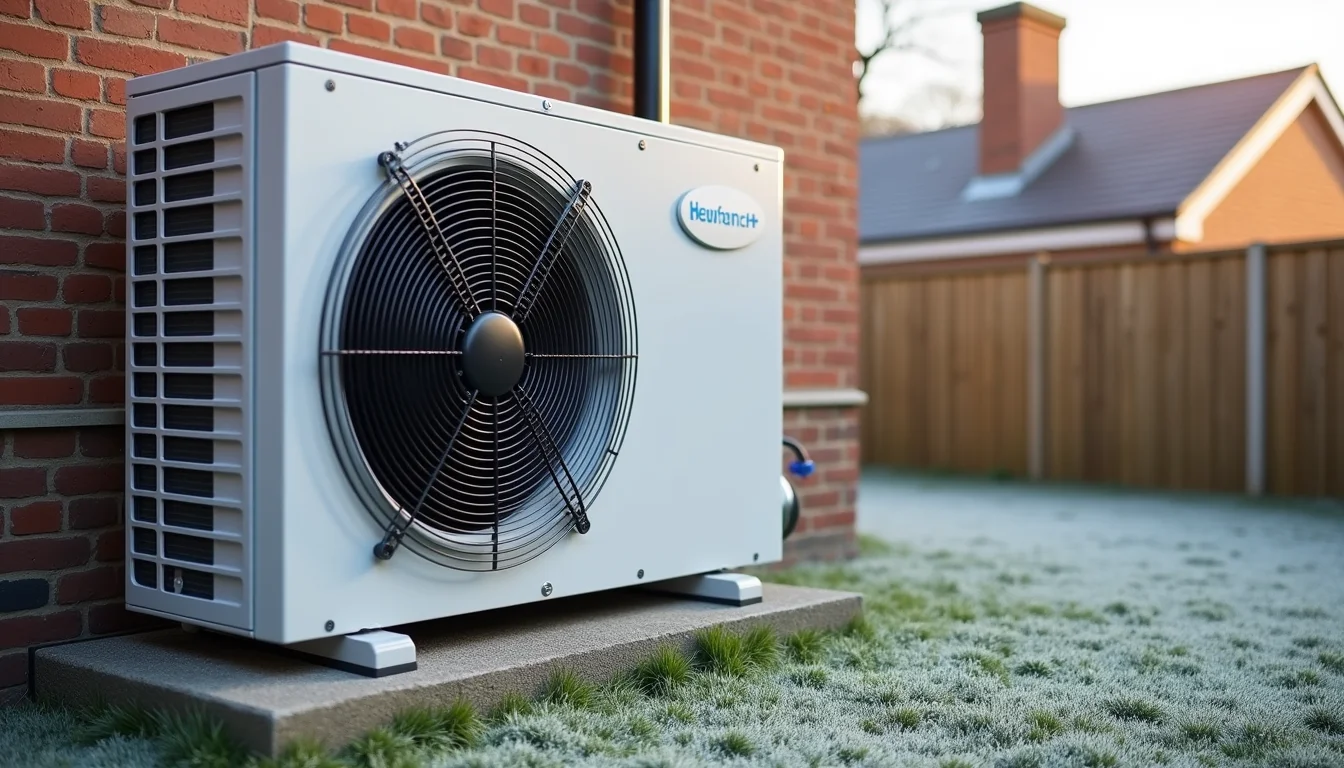
SCOP stands for Seasonal Coefficient of Performance, and it tells you how efficiently a heat pump performs across an entire heating season rather than at a single test point. It's the number that actually predicts what you'll pay to heat your home, because it accounts for the full range of outdoor temperatures your heat pump will face from October through to April. If you're comparing heat pump models, SCOP is the single most useful figure on the spec sheet.
How Does SCOP Work in Plain English?
Every heat pump has an efficiency rating that describes how much heat it produces for every unit of electricity it consumes. A SCOP of 3.5 means that over the course of a full heating season, the heat pump delivers 3.5 kWh of heat for every 1 kWh of electricity it uses. That's 350% efficient, which sounds odd until you remember that heat pumps don't generate heat from scratch. They move it from the outside air or ground into your home.
The "seasonal" part is what makes SCOP different from a standard COP figure. Instead of measuring performance at one fixed outdoor temperature, SCOP takes a weighted average across the temperatures you'd actually experience during a UK heating season. The calculation follows the European standard EN 14825, which defines climate zones. The UK falls into the "average" climate zone, with a design temperature of -10°C, though most of your heating hours will be at much milder temperatures around 2°C to 7°C.
So when a manufacturer quotes a SCOP of 3.8 for the average climate zone, that number already factors in the cold snaps, the mild spells, and everything in between.
What's the Difference Between SCOP and COP?
COP (Coefficient of Performance) is measured at a single outdoor temperature, usually 7°C for air source heat pumps, with a flow temperature of 35°C. It's a lab snapshot. A heat pump might have a COP of 4.5 under those conditions, which looks brilliant on paper.
But your heat pump doesn't run at 7°C all winter. On a freezing January morning in Leeds or Sheffield, that COP will drop. And on a mild November day, it'll be even higher than the rated figure. SCOP smooths all of this out into one number that reflects real-world use.
Think of COP as a car's top speed and SCOP as its average fuel economy over a year of mixed driving. Which one would you use to estimate your petrol costs?
Here's a quick comparison:
| Metric | What it measures | Conditions | Useful for |
|---|---|---|---|
| COP | Efficiency at one temperature | Usually 7°C air / 35°C flow | Comparing lab performance |
| SCOP | Seasonal average efficiency | Full heating season, mixed temps | Predicting real running costs |
The Energy Saving Trust recommends looking at SCOP rather than peak COP when estimating annual running costs, because it gives a much more realistic picture.
What SCOP Should You Look For in 2026?
Most decent air source heat pumps sold in the UK in 2026 will have a SCOP somewhere between 3.0 and 4.5, measured at a flow temperature of 35°C. Ground source models tend to sit between 3.5 and 5.0 because the ground temperature is more stable than the air.
A few things to watch out for:
-
Flow temperature matters hugely. A SCOP of 4.2 at 35°C flow will drop to around 3.0 or lower at 55°C flow. If you're keeping your existing radiators and need a higher flow temperature, make sure the SCOP is quoted for that scenario, not just the best case. Our guide on whether heat pumps work with existing radiators covers this in detail.
-
Climate zone matters. Check whether the SCOP is for the "average" climate zone (which covers the UK) or the "warmer" zone. Some manufacturers lead with the warmer climate figure because it looks better.
-
Don't chase the highest number at any cost. The difference in annual running costs between a SCOP of 3.5 and 4.0 on a typical UK home using 12,000 kWh of heat per year is roughly £100 to £150. If the higher-SCOP model costs £2,000 more, it'll take over a decade to pay back that premium through energy savings alone.
The MCS certification scheme, which all grant-eligible installers must hold, requires that heat pumps meet minimum performance standards. You can check certified products on the MCS certified product directory.
How SCOP Affects Your Actual Running Costs
Let's put some real numbers on this. Say you've got a 1930s three-bedroom semi in Hampshire with reasonable insulation, and your annual heating demand is around 12,000 kWh. At the current electricity rate of roughly 24.5p per kWh (Ofgem price cap, Q4 2026), here's what different SCOP ratings mean for your wallet:
| SCOP | Electricity needed | Annual heating cost |
|---|---|---|
| 3.0 | 4,000 kWh | £980 |
| 3.5 | 3,429 kWh | £840 |
| 4.0 | 3,000 kWh | £735 |
| 4.5 | 2,667 kWh | £653 |
The gap between a SCOP of 3.0 and 4.0 is about £245 per year. That's not trivial over a 20-year lifespan.
A couple in Southampton recently had a 9kW air source heat pump installed in their 1960s detached house. The total quoted cost was £13,500. After the £7,500 Boiler Upgrade Scheme grant, they paid £6,000 out of pocket. Their unit has a SCOP of 3.8 at 35°C flow, and they paired it with underfloor heating downstairs and upgraded radiators upstairs. Their electricity bills for heating over the first winter came to around £770, compared to roughly £1,100 they'd been spending on gas. And that's before the gas standing charge saving.
How the £7,500 BUS Grant Connects to SCOP
The Boiler Upgrade Scheme gives homeowners in England and Wales a £7,500 grant towards the cost of a heat pump installation. The scheme is confirmed to run until March 2028, according to gov.uk.
To qualify, you need an MCS certified installer fitting an MCS certified heat pump. And here's where SCOP comes in: the MCS certification process tests heat pumps against minimum efficiency thresholds. Any product on the MCS certified list will meet a baseline performance standard, so you're not going to end up with a truly poor performer if you go through the proper channels.
But "meets the minimum" isn't the same as "best value." Two grant-eligible heat pumps can have quite different SCOP ratings. Spending 15 minutes comparing the SCOP figures at your required flow temperature could save you hundreds of pounds a year for the next two decades.
Your installer should be able to explain the SCOP of the model they're proposing and what flow temperature the system will run at. If they can't, or won't, that's a warning sign. Our guide on questions to ask a heat pump installer before hiring covers what a good installer should tell you upfront.
"But the Manufacturer's SCOP Never Matches Real Life"
This is the most common concern homeowners raise, and they're not entirely wrong. Manufacturer SCOP figures are calculated under standardised conditions using EN 14825. Your actual performance will depend on your specific house, your heating habits, and how well the system was designed and installed.
That said, SCOP is still far closer to reality than COP. Research by the Energy Saving Trust and Nesta's electrification of heat project has shown that well-installed heat pumps in UK homes regularly achieve seasonal efficiencies between 2.8 and 3.5 in practice, with top performers reaching higher. The gap between quoted SCOP and real-world performance comes down to a few key factors:
- Oversized or undersized systems perform worse. Getting the sizing right is crucial. See our heat pump sizing guide for more on this.
- Higher flow temperatures reduce efficiency. If your installer has to run the system at 55°C because the radiators are too small, you won't hit the SCOP quoted at 35°C.
- Poor installation quality can knock 10-20% off performance. This is why MCS certification and choosing an experienced installer matters so much.
- Homeowner behaviour plays a role too. Constantly adjusting the thermostat or running the system in short bursts rather than letting it run steadily at a lower temperature will hurt efficiency.
The good news? If you get the installation right and run the system as designed, there's no reason your heat pump shouldn't perform close to its rated SCOP.
FAQs
What is a good SCOP rating for a heat pump in the UK?
A good SCOP for an air source heat pump in the UK is 3.5 or above at a 35°C flow temperature. Ground source models often achieve 4.0 or higher. Always check that the SCOP is quoted for the "average" European climate zone, which covers UK conditions.
Is SCOP or COP more important when choosing a heat pump?
SCOP is more useful because it reflects performance across a full heating season rather than at a single temperature. COP is a useful comparison point for lab conditions, but SCOP gives you a much better idea of what your actual running costs will be.
Does SCOP change depending on the flow temperature?
Yes, significantly. A heat pump's SCOP at 35°C flow temperature will be noticeably higher than at 55°C. If you need a higher flow temperature for your existing radiators, ask the manufacturer or installer for the SCOP at that specific flow temperature, not just the headline figure.
How do I find the SCOP for a specific heat pump model?
You can find SCOP figures on the manufacturer's product data sheet, usually listed under ErP (Energy Related Products) information. The MCS certified product directory also lists performance data for certified heat pumps. Your installer should provide this information as part of their quote.
Can a heat pump with a lower SCOP still be the right choice?
Yes. A slightly lower SCOP model that costs significantly less upfront might give you better overall value. The right choice depends on the total installed cost, the grant available, and how long you plan to stay in your home. A £1,500 cheaper unit with a SCOP of 3.3 versus 3.7 might take 12 or more years for the more efficient model to recoup its price difference.
If you're ready to compare heat pump options and get quotes from MCS certified installers near you, find local heat pump installers through our directory and start with the SCOP conversation from day one.
Ready to talk to an installer?
Compare the listed firms, then check current MCS status, service coverage and any grant registration directly. Contact routes are shown when a firm has published one.
Related guides
- How to Complain About a Heat Pump Installer — Your Rights
Know your rights if a heat pump installer underperforms. MCS complaints, consumer law, small claims court and BUS grant protections explained step by step.
- Daikin Heat Pump Installers UK — Approved Installers Explained
What do Daikin's D1, D1+ and Sustainable Home Expert tiers actually mean? We break down training, warranties and how to verify your installer's credentials.
- What to Expect on Heat Pump Installation Day
Wondering what happens on heat pump installation day? Get an hour-by-hour walkthrough covering prep, disruption, commissioning, and the questions to ask your installer.